A buyer's guide to Mixpanel and Amplitude implementation fees, event tracking scope, identity, governance, deliverables and decision-ready product analytics.
A product analytics implementation cost for SaaS should be based on the measurement system the company needs to operate—not the time required to paste a Mixpanel or Amplitude SDK snippet. On this site, the published Analytics & Tracking Implementation price is $2,500–$10,000+. The final scope can include the measurement plan, event taxonomy, identity, web or mobile instrumentation, warehouse or CRM inputs, governed reports, validation and team handover.
Platform subscription fees are separate unless a proposal explicitly includes them. The buyer should also distinguish planning from production engineering: a consultant may deliver specifications and QA while the product team implements code, or may own a larger end-to-end build. Historical backfill, legal review, mobile releases, CDP work and ongoing analytics operations should never be assumed from the word “implementation.”
The short answer
Choose a focused implementation when one product, one identity model and a small decision-critical event set need to become reliable. Choose the broader engagement when the system must connect anonymous acquisition, authenticated users, B2B accounts, subscriptions, feature usage and revenue across multiple sources. If the team has not selected a platform, begin with the GA4 vs Mixpanel vs Amplitude comparison; this article addresses what happens after requirements are known.
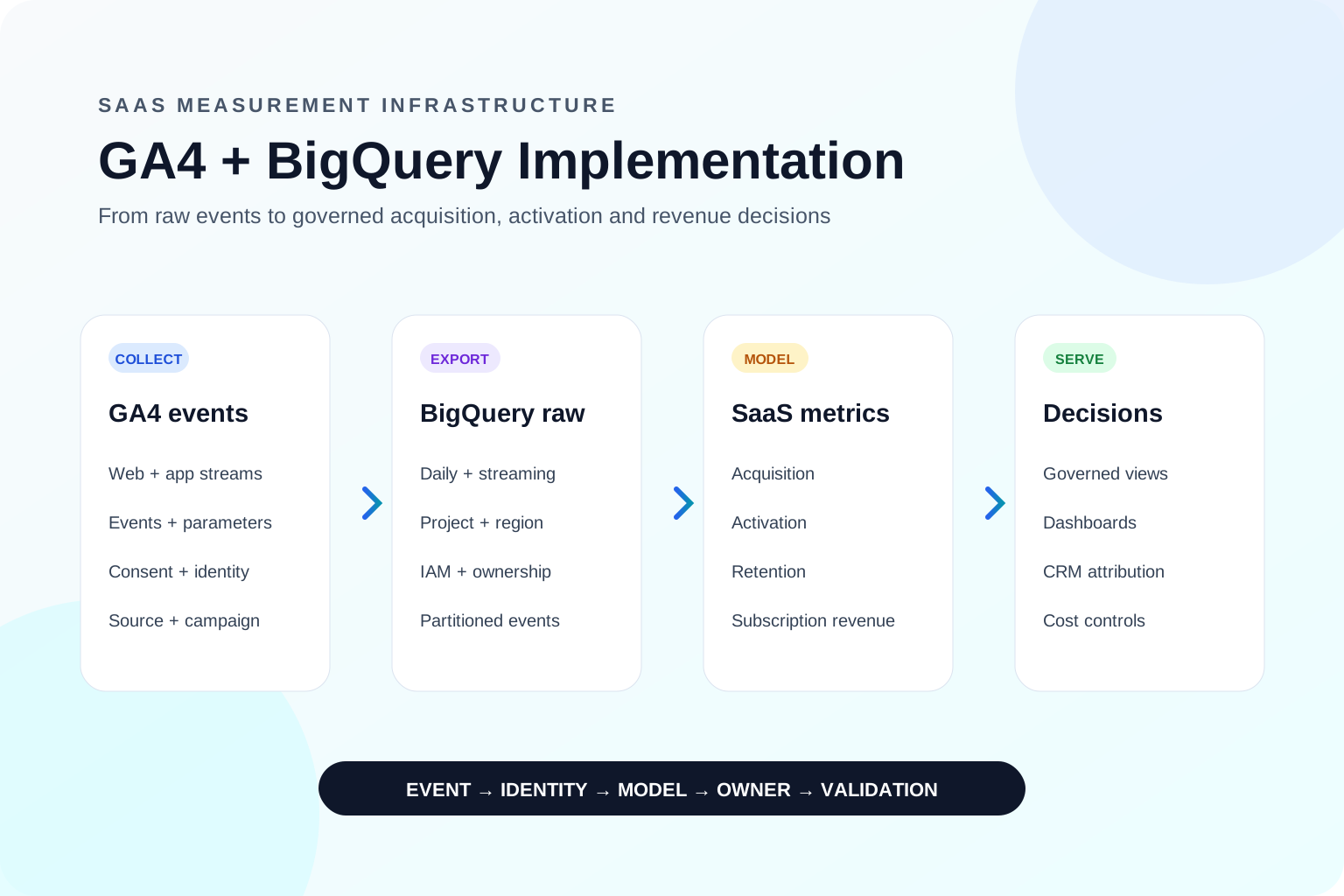
If the central need is reusable SQL and warehouse ownership rather than self-serve behavioral analysis, compare the GA4 and BigQuery implementation cost guide. Product analytics and a warehouse can complement each other, but they have different consumption models, governance boundaries and operating responsibilities.
What a product analytics implementation consultant actually delivers
The work begins with decisions. A SaaS team may need to understand activation, time to value, feature adoption, retention, account health, expansion or the effect of acquisition source on downstream behavior. Each question implies a population, identity grain, event, properties, time window and source of truth. Tracking every click without that structure increases data volume without increasing decision quality.
Measurement strategy. Prioritized questions, KPI relationships and acceptance criteria.
Identity architecture. Rules for anonymous users, authenticated users, devices, workspaces, accounts and subscriptions.
Implementation specifications. Client-, server- or warehouse-side collection, environments, consent gates and error behavior.
Validation and adoption. QA evidence, reconciliations, canonical reports, documentation, training and monitoring.
Mixpanel's official documentation describes identity management as maintaining IDs and mappings so activity is attributed to users accurately. Amplitude's official instrumentation guidance similarly recommends defining business questions, user identity, event taxonomy and project structure before writing tracking code. Those are architecture decisions, not post-launch cleanup.
The decision-to-event implementation model
01 · Decide
Name activation, retention, adoption or revenue decisions
02 · Model
Define users, accounts, events, properties and time grains
03 · Collect
Implement controlled client, server or warehouse signals
04 · Validate
Test schemas, identities, consent and source reconciliation
05 · Adopt
Publish governed reports, owners, monitoring and change rules
This framework prevents the common reverse process: collect a large event stream, build dashboards and only then ask which decision they support. For B2B SaaS, the identity model is especially important. A person may use several devices, belong to more than one workspace and influence an account whose subscription and revenue live in billing or CRM systems.
The following numerical chart is an illustrative planning example, not a benchmark. It shows how an implementation can prioritize coverage by approved business decisions rather than raw event count. If twelve decisions are proposed, but only nine have agreed definitions, seven have available source evidence and five pass end-to-end validation, the launch boundary is five validated decisions.
Proposed decisions12
Defined9
Instrumented7
Validated5
Illustrative scope-control example; not an industry benchmark.
The prices below are current published boundaries on this site, not universal market averages. A commercial proposal should map every amount to an output and explicitly identify customer responsibilities.
Table 1. Published service boundaries relevant to product analytics
Swipe horizontally to view all columns →
Table 1. Published service boundaries relevant to product analytics
Engagement
Published price
When it fits
Primary output
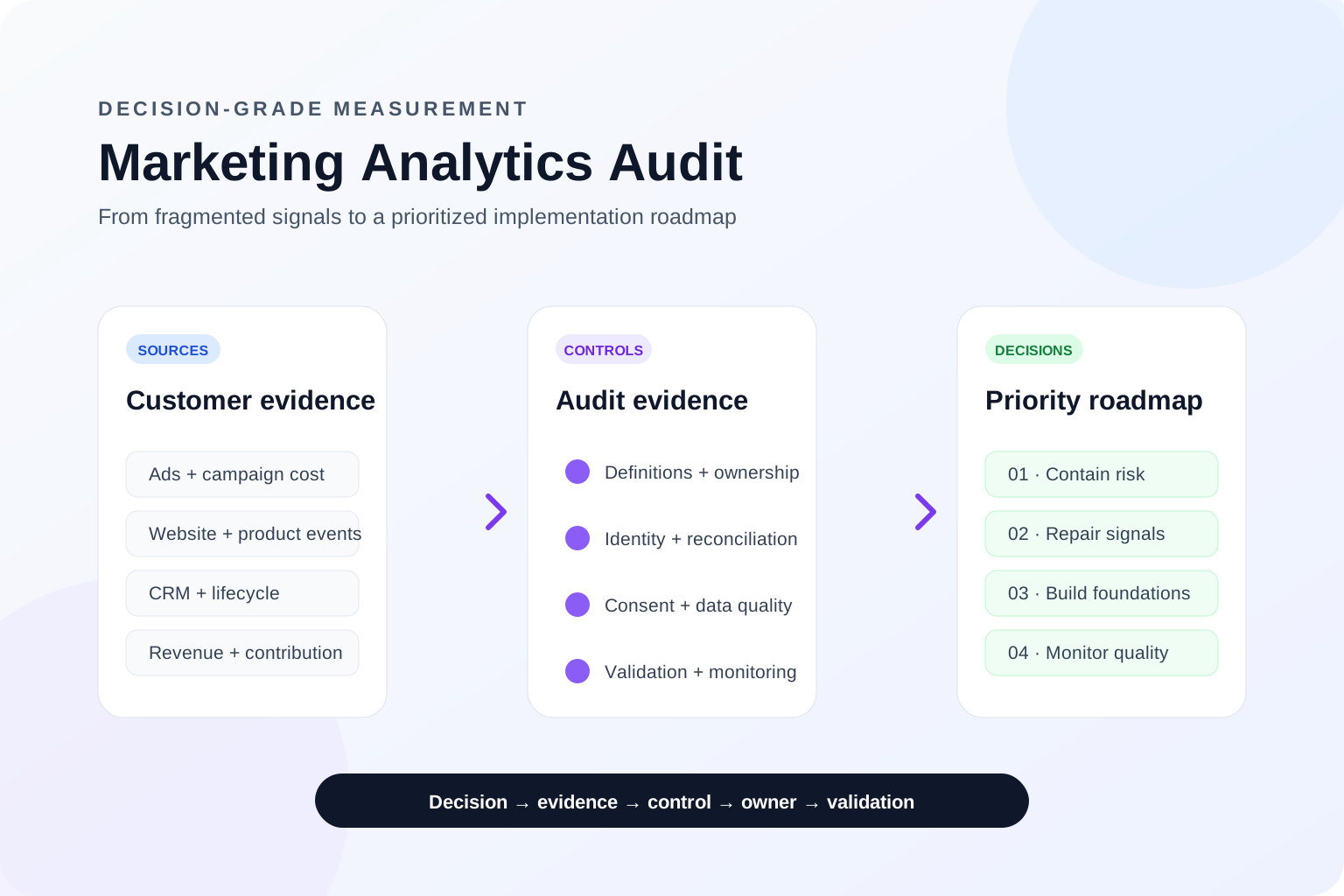
Growth Analytics Audit
Starting from $1,000
Events, identities or reports are disputed and the build scope is unclear
Prioritized evidence, risks and implementation roadmap
Analytics & Tracking Implementation
$2,500–$10,000+
Tracking, identity, product analytics, warehouse or reporting must be built
Validated and documented measurement system
Growth Analytics Partner
Starting from $2,000/month
The product, definitions and reporting needs will continue changing
Ongoing operation, models, monitoring and decision support
Table 2. Product analytics scope drivers and containment decisions
Swipe horizontally to view all columns →
Table 2. Product analytics scope drivers and containment decisions
Scope driver
Why it adds work
Containment decision
Platforms and environments
Web, iOS, Android, backend and staging require separate implementation and release QA
Launch one approved decision path first
User and account identity
Anonymous merge, multi-device use and B2B groups require explicit rules
Use deterministic IDs and document limitations
Event and property breadth
Every field creates implementation, governance and testing work
Prioritize events tied to approved decisions
Sources and destinations
CDP, warehouse, CRM, billing and ad systems add schemas and reconciliation
Integrate only sources required for phase-one questions
Governance and privacy
Consent, PII, retention, access and deletion require controls and stakeholder review
Agree policy decisions before technical delivery
Reports and enablement
Canonical funnels, cohorts, retention, training and documentation expand acceptance
Define a minimum decision-ready report set
Event volume is not the same as implementation value. A small, governed event set linked to activation and retention may be more useful than hundreds of undocumented interaction events. Mixpanel's governance guidance recommends a maintained tracking plan and clear roles; its validation documentation recommends testing in a separate development project before production. Those operating practices should be visible in scope.
A credible Mixpanel or Amplitude implementation process
Frame the decisions. Name the product questions, users, decisions, owners and evidence that will count as correct.
Audit the current state. Inspect existing events, schemas, identifiers, consent, environments, reports and backend sources.
Design the measurement model. Define the event taxonomy, properties, user and account identity, naming rules and versioning.
Specify and implement collection. Assign client, server or warehouse responsibilities and create testable requirements for each platform.
Validate end to end. Use development environments, test accounts and source records to verify event behavior, identity, timing, consent and duplicates.
Build canonical analysis. Create approved activation, funnel, cohort, retention or adoption reports tied to the initial decisions.
Hand over governance. Train owners, publish change rules, add monitoring and document known limitations and backlog.
Privacy configuration must follow the company's own policy and legal decisions. Amplitude's official privacy implementation guide recommends deciding the consent model first, then configuring initialization, identity storage, access and retention accordingly. A consultant can implement approved rules but should not invent the legal basis.
Deliverables and acceptance criteria
a decision map and prioritized measurement release;
a tracking plan with event, property, type, purpose, source and owner;
user, device, workspace, account and subscription identity rules;
environment, project, access, consent and data-retention design;
client-, server- or warehouse-side implementation specifications;
QA cases and evidence for normal, duplicate, missing and rejected data;
canonical funnels, activation, retention or adoption reports;
source reconciliations and documented expected differences;
monitoring, ownership, change control and known limitations;
a working handover session and prioritized next-phase backlog.
Acceptance should be written as user questions. For example: can a product manager segment activated B2B accounts by acquisition source, inspect the event and identity definitions, reproduce a sample account from source records and identify the owner when volume changes unexpectedly? “The SDK sends events” is only an implementation checkpoint.
Choose audit, implementation or ongoing product analytics support
Choose an audit when stakeholders dispute metrics, the current tracking plan is missing or tool selection is unresolved. Choose implementation when decisions and ownership are sufficiently clear to build. Choose ongoing support when new features, markets, teams and revenue models will continuously change the taxonomy and canonical analysis.
The Analytics Infrastructure service covers collection, pipelines, modeling and reporting. A strong proposal should identify the smallest useful release, customer dependencies, platform licensing, engineering ownership, acceptance tests and the work intentionally deferred.
Frequently asked questions
How much does product analytics implementation cost?
Cost depends on the decisions, platforms, event and identity scope, delivery environments, governance, dashboards and validation required. On this site, Analytics & Tracking Implementation is published at $2,500–$10,000+; a proposal should state whether Mixpanel or Amplitude licensing, production engineering, historical data, warehouse connections and ongoing support are excluded.
What does a Mixpanel or Amplitude implementation consultant do?
The consultant translates product decisions into a tracking plan, event taxonomy, user and account identity rules, SDK or pipeline requirements, QA tests, governed definitions, reports, monitoring and a handover process. Installing an SDK without those controls is not a complete implementation.
Should a SaaS company choose Mixpanel or Amplitude before hiring a consultant?
Not always. If the choice is unresolved, first define use cases, identity, governance, integrations, audience and expected operating model. A platform comparison can then be evaluated against real requirements instead of feature lists.
How long does product analytics implementation take?
There is no universal timeline. A focused web implementation with a small event set is different from a web-and-mobile B2B SaaS model with accounts, subscriptions, warehouse data, consent rules and multiple product teams. Dependencies and acceptance tests should drive the schedule.
What should the final handover include?
Expect a decision map, tracking plan, event and property dictionary, identity model, environment design, implementation specifications, QA evidence, governed reports, access and privacy controls, monitoring, owners, known limitations and a working handover session.
The commercial value of Mixpanel or Amplitude is not a larger event stream. It is a governed path from product behavior to decisions about activation, adoption, retention and growth that the team can understand and maintain.
Scope a product analytics implementation your SaaS team will use
Share the product decisions, current events, platforms, identity model, warehouse and reporting needs. The proposal should separate planning, engineering, validation and ongoing governance.
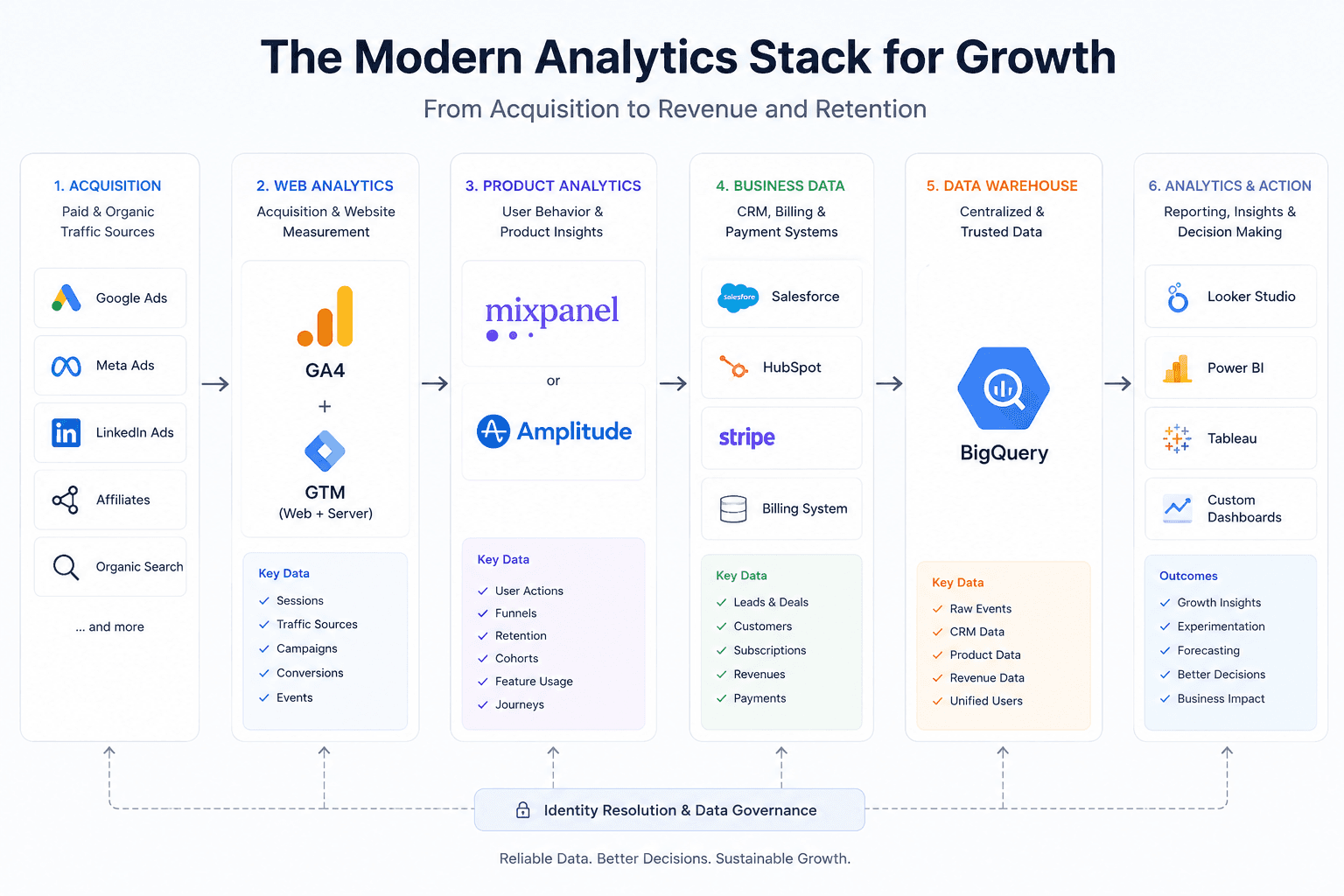
A growing business rarely suffers from a lack of data. It suffers from having data in the wrong places, answering the wrong questions. Google Analytics 4 may show which campaigns generate registrations. A CRM may show which leads become customers. A billing platform may record subscription revenue. Meanwhile, the product team may still be unable…