
Product Analytics
Product Analytics Implementation Cost for SaaS
See Mixpanel and Amplitude implementation scope, cost drivers, event tracking deliverables and buyer checks for decision-ready product analytics.
Read articleShare
A SaaS buyer's guide to implementation fees, Google Cloud operating costs, scope drivers and the deliverables required for decision-ready GA4 data.
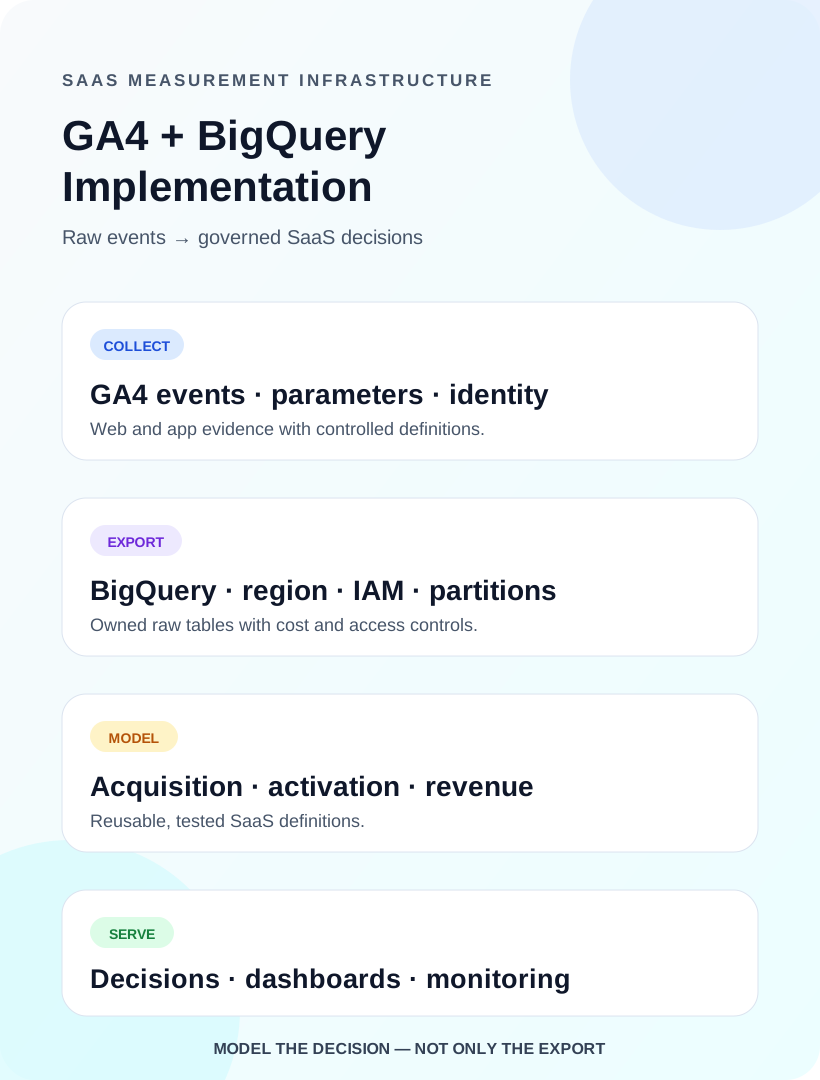
A GA4 + BigQuery implementation cost for SaaS should be priced by the measurement system that must be delivered, not by the few clicks required to create a product link. On this site, standalone BigQuery Setup starts from $800. A broader Analytics & Tracking Implementation is $2,500–$10,000+ and can include GA4/GTM, BigQuery, CRM integration, identity resolution, data modeling and a dashboard foundation.
Those amounts describe professional implementation work. Google Cloud storage and query processing are separate operating costs billed to the customer's Cloud account. Final implementation scope depends on event quality, properties and streams, user and account identities, source systems, model complexity, access controls, reporting use cases and the validation required before stakeholders rely on the output.
Buy the $800 starting-point setup when GA4 collection is already reliable and the immediate need is a correctly configured export with basic access, documentation and verification. Budget for the broader $2,500–$10,000+ implementation when raw events must become reusable SaaS metrics or connect with product, CRM, subscription and revenue evidence.
If the team is not yet sure whether its GA4 data is trustworthy, diagnose the risk first. The marketing analytics audit cost guide explains the difference between paying for diagnosis and paying to build. For a focused property review, use the Google Analytics audit checklist before committing unreliable event logic to a warehouse.
The fee pays for architecture and evidence. A consultant must translate business questions into event, identity and source requirements; configure the Google Cloud project and export; inspect the resulting schema; design reusable transformations; validate outputs against source systems; and leave the team with controls it can maintain.
Google documents that the export provides raw event data that can be queried with SQL and combined with external data. That capability is powerful, but it does not define a qualified lead, activated account, retained workspace or recognized subscription revenue. Those definitions are business logic and must be implemented explicitly.
Compare commercial proposals by boundary, not by the words “BigQuery setup.” The published prices below belong to this site and should not be read as universal industry ranges.
| Engagement | Published price | Appropriate boundary | Principal output |
|---|---|---|---|
| BigQuery Setup | From $800 | Narrow, well-defined setup when upstream collection and the first use case are already understood | Configured and verified BigQuery foundation for analysis |
| Analytics & Tracking Implementation | $2,500–$10,000+ | GA4/GTM, BigQuery, modeling, CRM or revenue sources, identity and reporting foundation as required | Validated, documented measurement system spanning tracking, data and reporting |
| Growth Analytics Partner | Starting from $2,000/month | Ongoing monitoring, maintenance, new models, integrations and decision support after the initial build | Continuously operated measurement and growth decision system |
See the consulting pricing page for the current public wording. A proposal should still state what is excluded: historical backfill, non-Google connectors, production dashboard design, reverse ETL, ongoing maintenance and privacy or legal review are not implied merely because BigQuery is named.
Implementation architecture
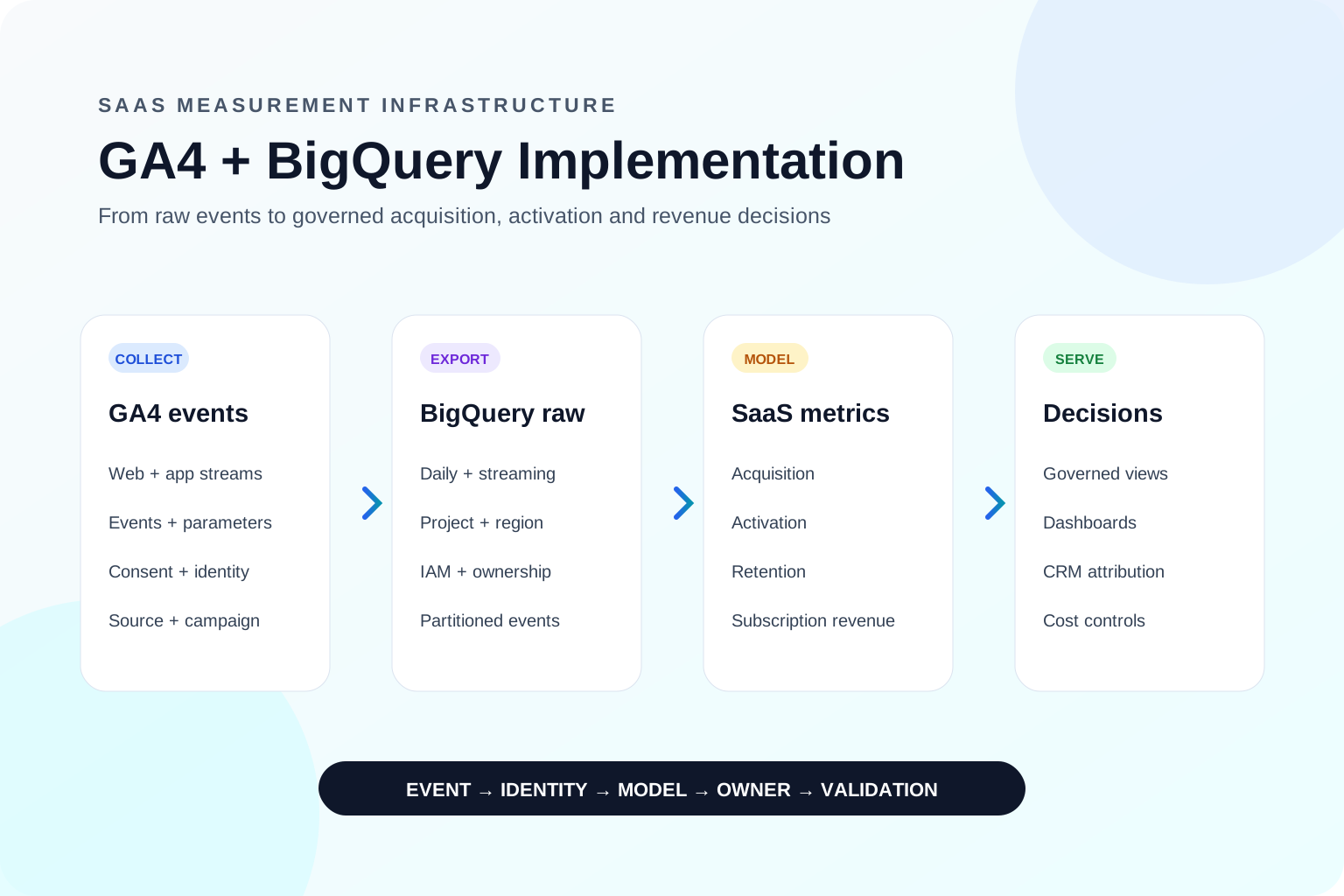
The link is only the transport layer. A decision-ready implementation controls collection, export, modeling and consumption as one system.
Collect
GA4 web and app events with agreed names, parameters, consent and identity
Export
Daily or streaming event tables in the correct Google Cloud project and region
Model
Reusable sessions, acquisition, activation, account, subscription and revenue logic
Serve
Governed views for analysis, dashboards, CRM attribution and decision workflows
Google requires an Analytics property role and Google Cloud permissions to create the link. The implementation must also choose the data location, streams, event exclusions, and Daily or Streaming export. For Analytics 360, Fresh Daily is another option. Region choice deserves early attention because changing it later can require dataset migration and operational care.
Review the official GA4 BigQuery Export setup documentation for current permissions, export modes and limits. Google states that Standard properties have a one-million-event limit for the Daily batch export; teams near that boundary should treat volume monitoring and export strategy as part of the design, not as a surprise after launch.
Raw GA4 tables are event-oriented. SaaS decisions are usually customer-, account-, subscription- and period-oriented. The model must bridge that difference without pretending that an anonymous browser, authenticated user, workspace and paying account are the same entity.
The official GA4 BigQuery Export schema reference should be the technical starting point. The implementation should then create stable views or modeled tables so analysts and dashboards do not re-invent session, acquisition and conversion rules in every query.
When closed-won revenue is central, the warehouse boundary should connect to the CRM design described in the GA4 and CRM revenue attribution guide. If product behavior needs a dedicated behavioral system, the GA4 vs Mixpanel vs Amplitude comparison helps separate warehouse ownership from product analytics tooling.
Do not combine the consultant fee and Google Cloud bill into one vague number. BigQuery separates compute used for query processing from storage. On-demand queries are charged by bytes read, while capacity pricing uses compute resources. Google also publishes free-tier allowances, but eligibility and usage must be checked in the customer's own billing account.
Cloud cost is therefore an operating-design question. A small dataset can still produce waste if dashboards repeatedly scan every date and column. A larger dataset can be controlled with partition filters, selected columns, reusable aggregates, query quotas, maximum-bytes-billed limits, dry runs, budgets and alerts.
Illustrative query-scope model
Assume one day of selected columns represents 1 GiB. Filtering a partitioned table to 30 days scans 30 GiB instead of 365 GiB—about 92% less data processed for that query.
335 GiB avoided per run
This is an explanatory model, not a forecast of your dataset size or Google Cloud bill. Actual billing depends on region, pricing model, free-tier eligibility, selected columns and query design.
Google recommends estimating bytes before running queries, using custom quotas and maximum bytes billed, and setting Cloud Billing budgets and alerts. See the official BigQuery cost-estimation and control guidance. The final implementation should make these controls visible to the people who own dashboards and scheduled jobs.
| Scope driver | Why it adds work | Evidence required | Containment decision |
|---|---|---|---|
| GA4 collection quality | Broken events and parameters must be repaired before modeling | Debug, network, GA4 and export checks | Fix only decision-critical events first |
| Properties, streams and regions | Each boundary changes export, access and consolidation logic | Property map, Cloud projects and residency requirements | Choose one governed landing architecture |
| Identity complexity | Anonymous users, logins and accounts require explicit joins | ID availability, uniqueness, consent and lifecycle rules | Start with deterministic IDs and named limitations |
| External sources | CRM, billing and ads need ingestion, schema and reconciliation | APIs, extracts, keys, update cadence and source ownership | Add sources only for approved decisions |
| Metric and model depth | Activation, MRR, retention and attribution require tested logic | Definitions, sample records and expected outputs | Prioritize a minimum viable semantic layer |
| Reporting and handover | Dashboards, documentation and training expand acceptance work | Audience, decisions, refresh needs and owners | Separate foundation from optional presentation layers |
Access delays are a commercial factor too. The proposal should list the GA4, Google Cloud, GTM, CRM, billing and BI permissions required before delivery begins. Waiting for ownership decisions is different from engineering effort, but it still affects the calendar and coordination cost.
The implementation should preserve raw evidence and version modeled logic. That allows the team to correct a definition without rewriting history by hand or silently changing every dashboard.
A complete handover should let an internal analyst, engineer or implementation partner operate the system without rediscovering its assumptions. Depending on scope, expect:
Acceptance should test business questions, not merely table existence. For example: can the team reproduce activated accounts by acquisition source for a defined period, trace exceptions to source records, estimate bytes before a scheduled query runs and identify who owns a failed refresh?
Choose the narrow setup when GA4 is clean, one Cloud project is approved, the team understands the schema and only needs an export foundation. Choose full implementation when definitions, identities, models, external sources or decision-ready views must be built. Add ongoing support when scheduled jobs, dashboards, sources and business definitions will continue to change.
If GA4 and BigQuery are only one layer in a wider CRM, billing, identity or activation problem, start with the marketing data infrastructure consultant guide before locking the broader architecture to this specific stack.
The Analytics Infrastructure service covers the build phase across collection, pipelines, modeling and reporting. A credible proposal should identify the smallest useful release, its acceptance tests and the work deliberately deferred to a later phase.
On this site, a standalone BigQuery Setup starts from $800. A broader Analytics & Tracking Implementation costs $2,500–$10,000+ and may include GA4/GTM implementation, BigQuery, data modeling, CRM integration and a dashboard foundation. The final scope depends on the number of properties, streams, identities, source systems, transformations and reporting requirements.
No. The implementation fee pays for professional work such as architecture, configuration, SQL modeling, validation, documentation and handover. Google Cloud usage is billed separately to the customer's Cloud Billing account and depends mainly on storage, query processing, region, pricing model and cost controls.
GA4 Standard properties can link to BigQuery, and Google documents a one-million-event daily batch export limit for Standard properties. BigQuery Sandbox and free-tier allowances may support early testing, but production suitability still depends on event volume, billing setup, retention, access, operational controls and the queries the team needs to run.
There is no universal timeline. A narrow export setup is faster than a SaaS implementation that must repair GA4 events, define identity, join CRM or billing data, model activation and revenue, build reporting views and complete stakeholder acceptance testing. The proposal should name dependencies and acceptance criteria instead of promising a generic duration.
Not automatically. The export contains event-level data, while the GA4 interface applies reporting logic, identity and other processing. A credible implementation documents how each metric is calculated, explains expected differences and validates the business decisions that depend on the modeled result.
Expect a project and dataset map, IAM roles, export configuration, event and identity assumptions, modeled SQL or views, metric definitions, validation evidence, query-cost controls, monitoring, ownership, known limitations and a working handover session. A linked dataset without reusable models and operating instructions is not a complete SaaS implementation.
The commercial value of GA4 and BigQuery is not owning more raw events. It is being able to explain how an acquisition signal becomes a user, account, subscription and revenue decision—and to operate that logic with controlled access, cost and change. Price the implementation against that responsibility.
Share this article
Build the model behind the dashboard
Share your GA4 properties, event volume, product identities, CRM and billing sources, reporting decisions and current Cloud setup. The proposal should separate export configuration, data modeling, validation and ongoing operation.
Related
See Mixpanel and Amplitude implementation scope, cost drivers, event tracking deliverables and buyer checks for decision-ready product analytics.
Read article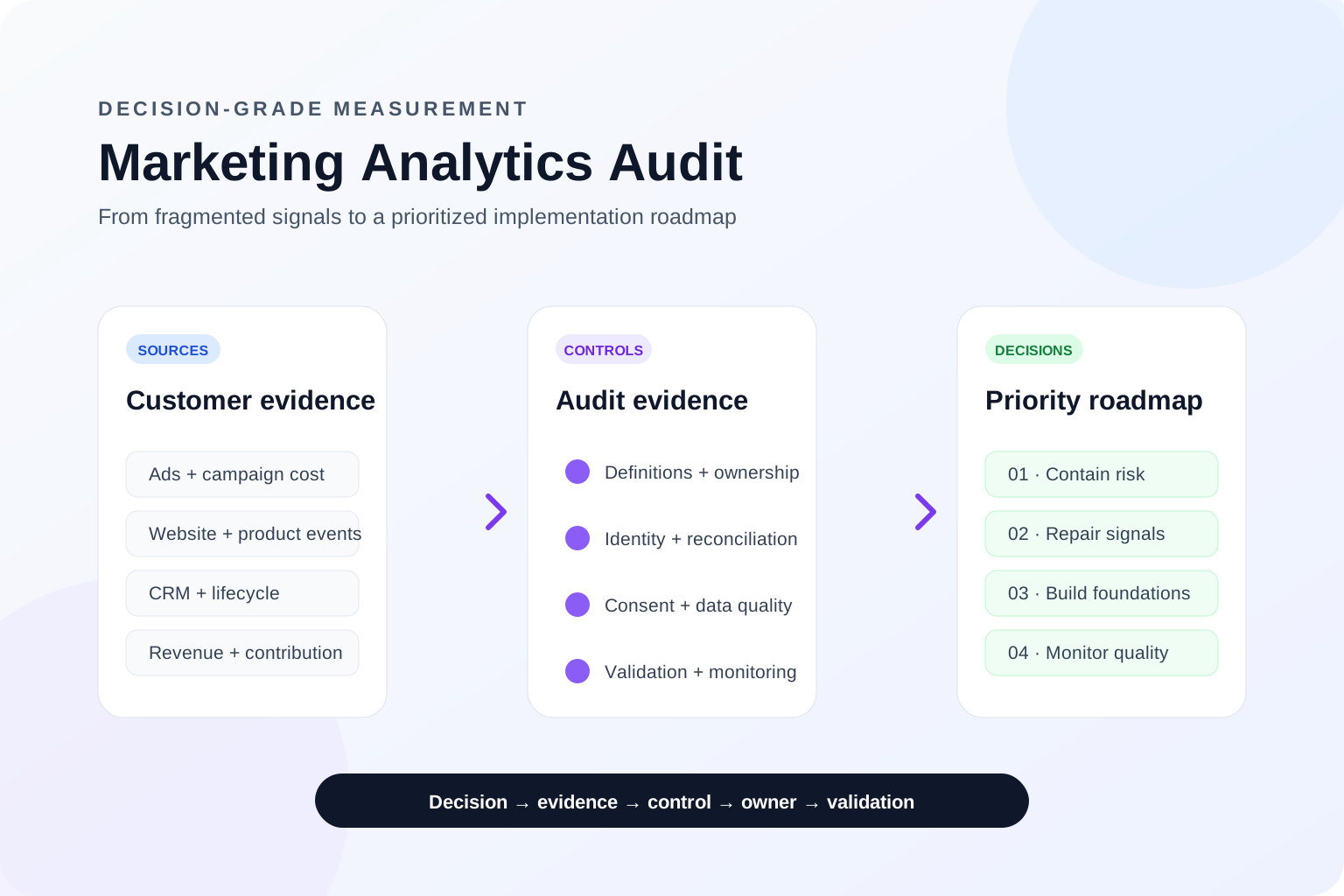
See what a marketing analytics audit costs, which systems and decisions the scope should cover, and what evidence and roadmap you should receive.
Read article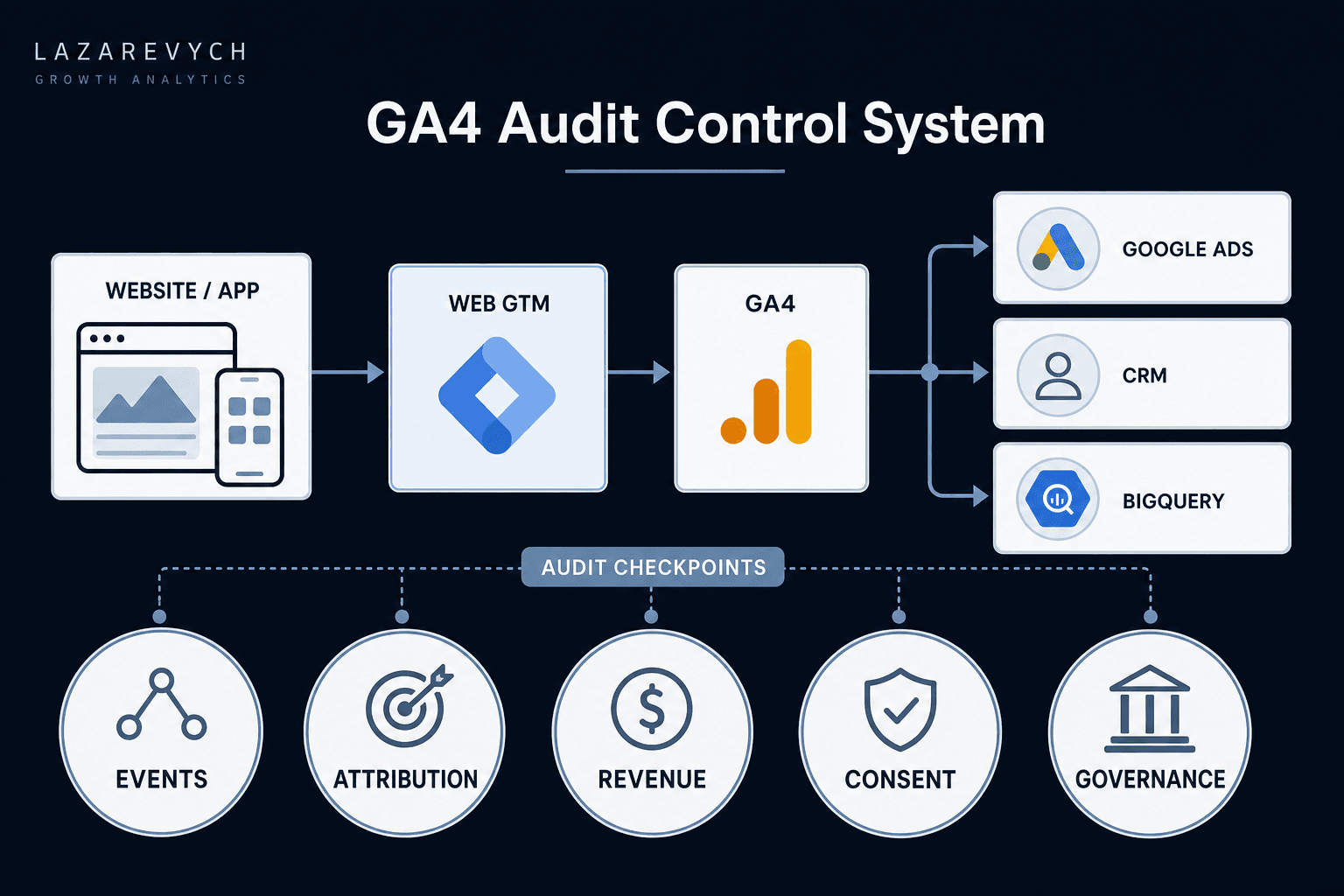
A practical GA4 audit framework for finding tracking, attribution, revenue and data-quality problems — and prioritising the issues that can damage business decisions.
Read article