A buyer's guide for ecommerce teams comparing funnel-audit scope, pricing and deliverables—plus a practical way to value conversion leaks before paying for recommendations.
If you are searching for an ecommerce conversion funnel audit cost, you probably do not need another generic list of checkout best practices. You need to know what a credible audit should examine, what the deliverable should enable, and whether the likely revenue opportunity justifies the fee.
The difficult part is that providers use the same word—audit—for very different products. One may deliver a templated checklist after a visual review. Another may reconcile GA4 and platform data, segment the funnel, review behavior evidence, model revenue impact and produce an implementation or experimentation roadmap. Those services should not cost the same.
The short answer
A focused ecommerce funnel review can cost a few hundred dollars. Publicly listed specialist CRO audits commonly move into the low-to-mid four figures, while research-heavy or enterprise work can reach five figures. The correct price depends less on store revenue than on the number of journeys, templates, markets, data sources and evidence types included.
On this site, a broader Growth Analytics Audit starts from $1,000. That is a starting point, not a fixed ecommerce-audit quote: final scope depends on the systems, current tracking quality, channels and depth of analysis required.
The audit should connect reliable measurement to a specific funnel constraint, quantify the opportunity, and recommend the next action—not merely list perceived UX problems.
What you are actually buying
The audit is not the slide deck. You are buying reduced uncertainty around a decision: which constraint is real, what may be causing it, how much it could be worth, and what the team should do next.
A defensible ecommerce conversion funnel audit should answer five questions:
Can the measurement be trusted? Broken or duplicated events can make a healthy stage look weak—or hide a real problem.
Where is the economically important loss? The largest percentage drop is not automatically the largest revenue opportunity.
Which segments create the pattern? Device, channel, new versus returning visitors, geography, category and price point can tell different stories.
What evidence explains the loss? Analytics identifies where behavior changes; it rarely proves why by itself.
What action has sufficient confidence? A tracking fix, usability correction, merchandising change and A/B test require different evidence.
Shopify's own ecommerce CRO audit guide describes the work as a combination of goal definition, priority-page analysis, behavioral research, quick wins, testing and monitoring. The commercially useful version goes one step further: it connects those findings to contribution, orders and implementation effort.
Ecommerce funnel audit cost ranges
Ecommerce conversion audit pricing varies widely because the deliverables are not standardized. A surface-level expert review should not be compared directly with a funnel audit that validates measurement, segments behavior, quantifies revenue impact and produces implementation specifications. Use the scope-based planning bands below to compare like with like—not as a universal market benchmark.
Table 1. Audit price bands by scope—not by provider label
Swipe horizontally to view all columns →
Table 1. Audit price bands by scope—not by provider label
Audit format
Indicative published range
What should be included
Main limitation
Template or expert review
Hundreds to low four figures
Visual review, checklist and prioritized observations
May not validate data or quantify the opportunity
Focused funnel audit
Low-to-mid four figures
Measurement validation, segmentation, behavior evidence and roadmap
Usually limited to defined journeys or templates
Research-heavy or enterprise audit
Mid four figures to five figures
Multiple markets, journeys, research methods, technical review and business case
More coordination, access and research time
Ongoing CRO program
Monthly engagement
Continuous research, experiment design, implementation and learning system
Not comparable with a one-time audit
When comparing an ecommerce funnel audit service, focus less on which provider publishes the lowest headline number. Compare whether the scope includes measurement validation, segmentation, quantified revenue impact, evidence-backed hypotheses and implementation detail. A lower-cost review can be appropriate when the question is narrow; it becomes expensive when the team still cannot decide what to fix, test or measure next.
What increases the price?
multiple storefronts, countries, currencies or languages;
a large catalog with materially different category and product templates;
subscriptions, bundles, marketplaces or custom checkout logic;
uncertain GA4, GTM, pixel or server-side measurement;
identity and revenue reconciliation across Shopify, CRM, payment and analytics systems;
qualitative research such as interviews, surveys or extensive session review;
implementation specifications, experiment designs or developer support;
stakeholder workshops, documentation and executive business cases.
Funnel audit vs CRO audit vs analytics audit
These engagements overlap, but they start from different questions. An ecommerce CRO audit service usually emphasizes behavior research and experimentation, while an analytics audit begins with measurement reliability. A funnel audit connects those perspectives to economic impact. Buying the wrong engagement creates either a beautifully researched answer built on unreliable data or technically correct tracking that never explains what to improve.
Table 2. Choose the audit that matches the uncertainty
Swipe horizontally to view all columns →
Table 2. Choose the audit that matches the uncertainty
Engagement
Primary question
Typical evidence
Best next output
Ecommerce funnel audit
Where does the purchase journey lose the most economic value?
Stage rates, segments, revenue and behavior evidence
Prioritized constraint and action roadmap
CRO audit
Which experience or persuasion problems should we improve?
UX review, research, recordings, copy and experimentation history
Hypothesis or experimentation backlog
Analytics audit
Can the measurement support the business decision?
Implementation, event payloads, attribution, consent and reconciliation
Measurement fixes and validation plan
Technical performance audit
Do speed, errors or integrations create measurable friction?
Core Web Vitals, logs, errors, browser/device and checkout telemetry
How to estimate the revenue impact before the audit
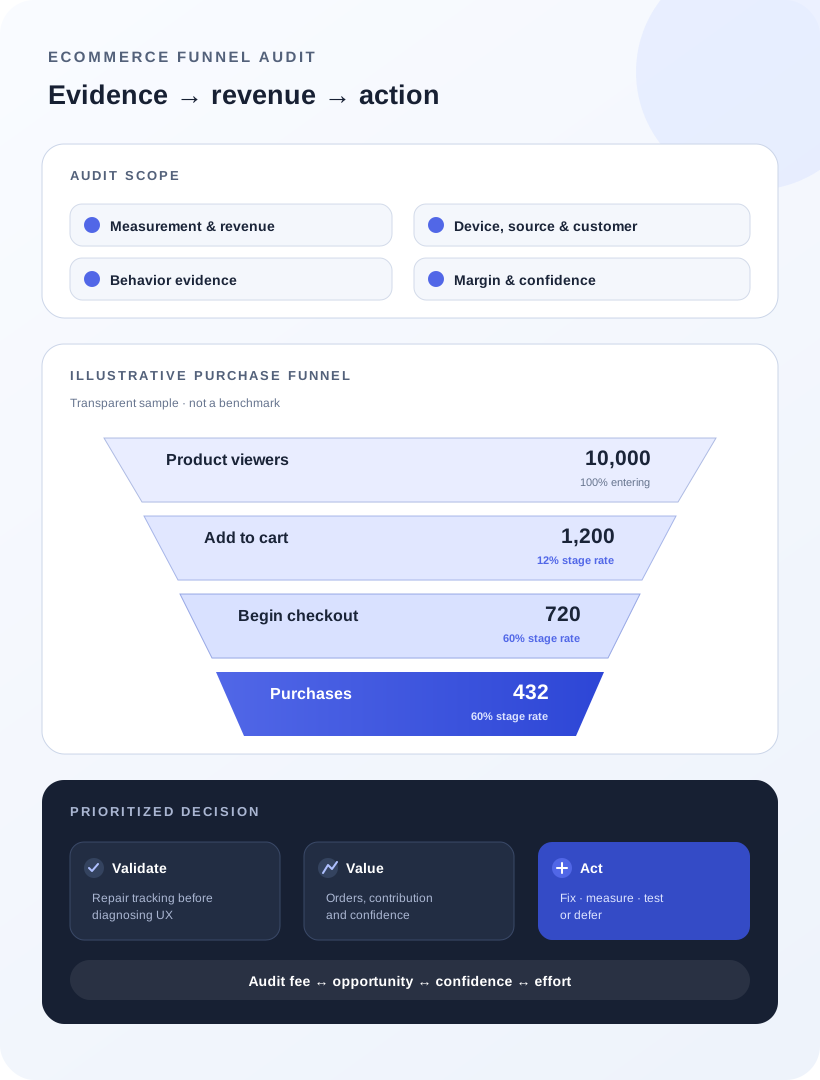
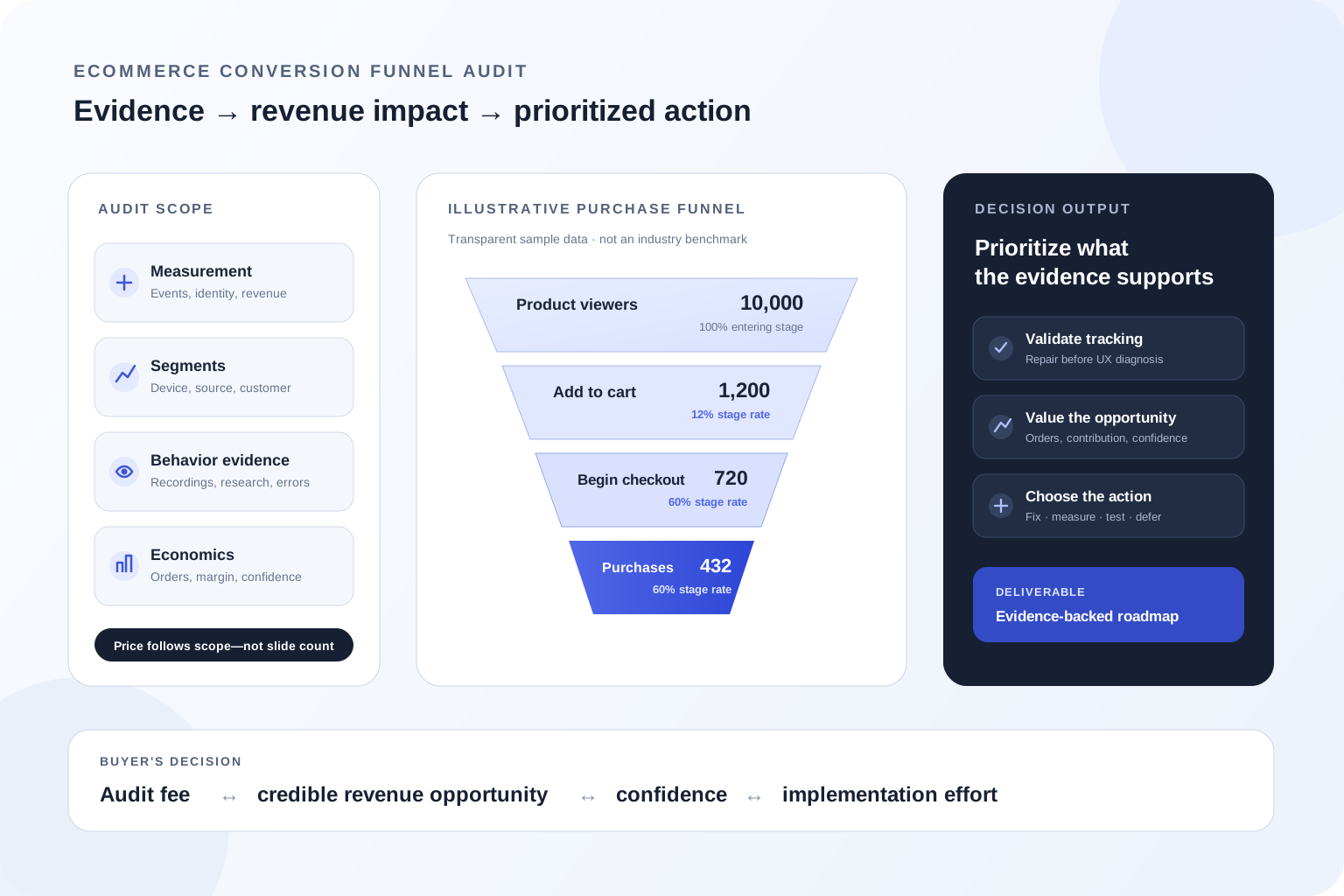
A funnel should be modeled as connected transitions, not a collection of isolated benchmark percentages. A simple ecommerce path is:
Product viewers → add to cart → begin checkout → purchase.
Google documents standard ecommerce events such as view_item, add_to_cart, begin_checkout and purchase. The event names are useful only when the implementation, item arrays, currency, transaction IDs and denominators are consistent.
For a first-pass opportunity model:
Choose one segment and time window.
Calculate each step-to-step conversion rate using the same user or session basis.
Apply a small, explicit rate change to one stage while holding the others constant.
Convert incremental purchases into revenue, then contribution margin.
Discount the result for confidence, seasonality and implementation risk.
One percentage point means an absolute change—for example, 12% to 13%—not a 1% relative increase. Illustrative model only; not an industry benchmark or revenue forecast.
The same one-percentage-point improvement can create different revenue impact depending on where it occurs and how many shoppers reach that stage.
In the illustrative model, improving product-view-to-cart conversion from 12% to 13% produces more incremental orders than moving a later 60% stage to 61%, because the upstream change applies to a larger population. That does not prove the product page should be redesigned. It tells you where deeper diagnosis could have higher leverage if the measurement and evidence support it.
You can run the same logic in the free Funnel Analysis tool to compare bottlenecks and modeled revenue impact before commissioning a broader audit.
What the audit scope should include
A useful statement of work should name the journeys, evidence and output. “Full website audit” is not enough.
Table 3. Ecommerce funnel audit scope checklist
Swipe horizontally to view all columns →
Table 3. Ecommerce funnel audit scope checklist
Scope area
Questions to answer
Evidence expected
Measurement integrity
Are core events complete, deduplicated and revenue values correct?
Tag review, debug evidence, platform reconciliation
Journey definition
Which paths, templates and checkout variants are in scope?
Funnel definitions and flow map
Segmentation
Where does performance change materially?
Device, channel, visitor, geography, category and product views
Behavior diagnosis
What evidence may explain the observed loss?
Recordings, heatmaps, surveys, search terms, reviews and support themes
Technical risk
Do speed, errors, inventory or integrations interrupt the journey?
Performance, browser/device and error checks
Economics
What is the credible value of improvement?
Orders, AOV, contribution margin, repeat value and scenario ranges
Prioritization
What should be fixed, tested, measured or deferred?
Impact, confidence, effort, dependency and owner
Data and access required
Before accepting a quote, confirm what the provider needs and who will supply it. Delayed access can turn a two-week analysis into a month-long project without improving the result.
analytics property and tag-management access;
ecommerce platform and checkout configuration;
advertising-platform data for traffic-quality context;
revenue, refunds, cancellations and discount definitions;
heatmaps, recordings, search, reviews, surveys or support evidence;
experiment history and past implementation notes;
known releases, promotions, outages and seasonal events;
stakeholder context on margin, inventory, fulfillment and business constraints.
The audit should also state its comparison unit. Users, sessions, transactions and items answer different questions. Mixing them can manufacture a funnel problem that does not exist.
What a useful deliverable looks like
A list of 70 recommendations often looks comprehensive and performs poorly. A decision-ready deliverable should make the evidence and trade-offs inspectable.
Executive finding: the constraint, business impact and confidence level.
Measurement note: what was validated, what remains uncertain and which definitions were used.
Segment evidence: where the pattern strengthens, disappears or reverses.
Revenue model: assumptions, baseline, plausible change and contribution—not only top-line revenue.
Recommendation: the exact action, expected mechanism, owner and dependency.
Validation method: QA check, before/after monitoring, usability research or experiment.
Prioritized backlog: impact, confidence, effort and sequencing.
Evidence-to-action audit framework
01
Verify measurement
Confirm events, identities, revenue and denominators before diagnosing UX.
02
Locate the constraint
Segment funnel loss by device, source, visitor type, category and checkout path.
03
Triangulate evidence
Combine quantitative data with recordings, research and technical checks.
04
Value the opportunity
Translate a credible rate change into orders, contribution and payback impact.
05
Choose the action
Fix a defect, instrument a gap, run a test or deprioritize the hypothesis.
A defensible audit moves from trustworthy measurement to a prioritized action; it does not jump from a benchmark to a redesign recommendation.
This is the difference between “simplify the checkout” and a decision such as: “Mobile paid-social visitors lose disproportionately at shipping selection; event validation passed, recordings show address-entry retries, and the modeled contribution opportunity justifies a technical fix before a design experiment.”
Do you need an audit or an A/B test?
An audit diagnoses and prioritizes. An A/B test estimates the causal effect of a specific change. They are complementary, but one cannot substitute for the other.
Table 4. Choose the next action from the evidence you already have
Swipe horizontally to view all columns →
Table 4. Choose the next action from the evidence you already have
Situation
Best next step
Why
Core events or revenue do not reconcile
Measurement repair or analytics audit
A test cannot rescue an unreliable outcome metric
You know performance is weak but not where or why
Funnel audit
The uncertainty is diagnostic
A clear defect blocks purchase
Fix and validate
Do not randomize users into a known broken experience
A plausible change has meaningful upside and sufficient traffic
A/B test
The uncertainty is causal and measurable
Traffic is too low for the minimum effect that matters
Research, larger change or alternative validation
An underpowered test can consume time without resolving the decision
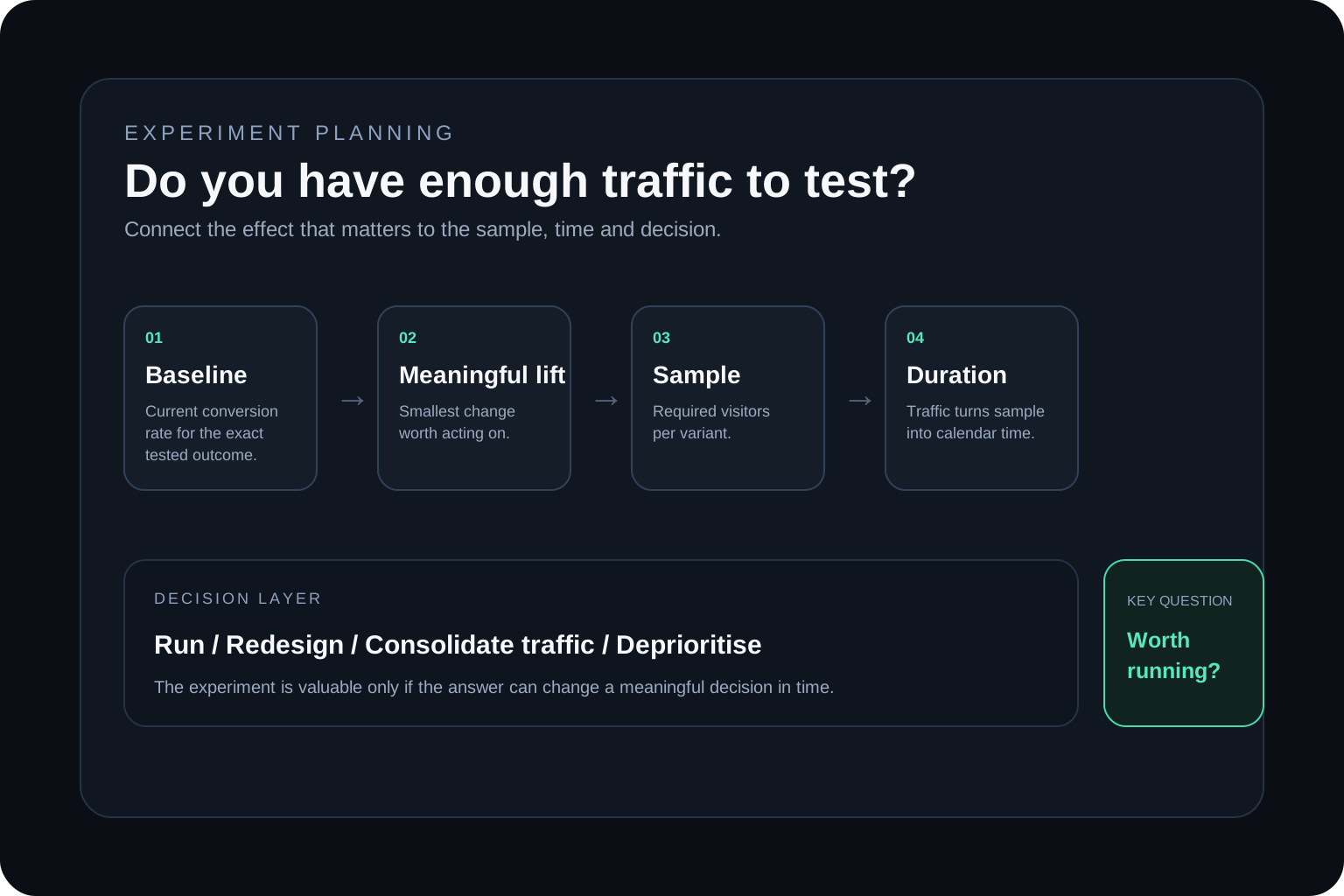
Before paying to implement an experiment, use the A/B Test Calculator and the guide to required A/B test sample size to check whether the traffic and minimum detectable effect support a useful test.
How to choose an ecommerce funnel audit consultant
Before you hire an ecommerce funnel audit consultant, ask for the reasoning system—not a promise of a conversion lift. No credible consultant can guarantee a specific result before validating the data, constraint and implementation environment. Whether a provider uses the title ecommerce auditor or conversion funnel analysis consultant, the evidence standard should be the same.
Useful questions before hiring:
Which journeys, countries, devices and templates are included?
Will you validate analytics before using funnel data?
How do you distinguish traffic-quality, measurement, UX and technical problems?
Which qualitative evidence is included, and how much?
How will recommendations be tied to revenue or contribution?
Will the model show assumptions and uncertainty?
Does the fee include implementation specifications or experiment design?
Who owns the data, files, documentation and experiment backlog?
What is explicitly out of scope?
Red flags include guaranteed lifts, recommendations based only on generic benchmarks, no measurement validation, a very large unprioritized checklist, or a revenue projection that ignores margin and confidence.
If you need the funnel, analytics and economics reviewed together, see the Growth Audit service. If the next need is friction research, prioritization, experiment design or interpretation, see Conversion Rate Optimization & Experimentation. If the finding is already clear and the next need is technical instrumentation or production implementation, Growth Engineering may be the more direct engagement.
Frequently asked questions
How much does an ecommerce conversion funnel audit cost?
Public offers range from a few hundred dollars for a focused or templated review to five figures for research-heavy, multi-market or enterprise work. Compare the exact journeys, validation, research, revenue modeling and implementation support included—not the word “audit.” Lazarevych Growth Analytics Audits start from $1,000, with final pricing confirmed after scope.
How long does an ecommerce funnel audit take?
A focused review may take roughly one to two weeks once access and data are available. Broader work involving multiple markets, research methods, technical validation or stakeholder workshops can take several weeks. The proposal should separate analysis time from delays caused by missing access or insufficient data.
What should an ecommerce funnel audit include?
At minimum: measurement validation, a defined purchase journey, relevant segmentation, quantitative and qualitative evidence, revenue-impact scenarios, and a prioritized roadmap that distinguishes fixes, tests and measurement work.
Can a funnel audit guarantee a conversion-rate increase?
No. An audit can reduce uncertainty and identify higher-confidence opportunities, but the result depends on implementation quality, customer behavior, traffic mix, commercial constraints and whether experiments confirm the hypotheses.
Should a small Shopify store pay for an audit?
A Shopify conversion funnel audit is worth paying for only if the decision value justifies the fee. A smaller store can first validate tracking, model its largest funnel opportunity and use targeted customer research. If traffic is too low for frequent A/B testing, prioritize defects, high-confidence evidence and larger changes rather than purchasing an enterprise experimentation program.
What happens after the audit?
Each recommendation should move into one of four paths: repair measurement, fix a verified defect, implement a high-confidence improvement with monitoring, or design a controlled experiment. If you want help deciding which scope is credible, share your current ecommerce stack and funnel problem.
Estimate the revenue impact of each stage, then decide whether the next step is measurement repair, deeper diagnosis, implementation or a controlled experiment.
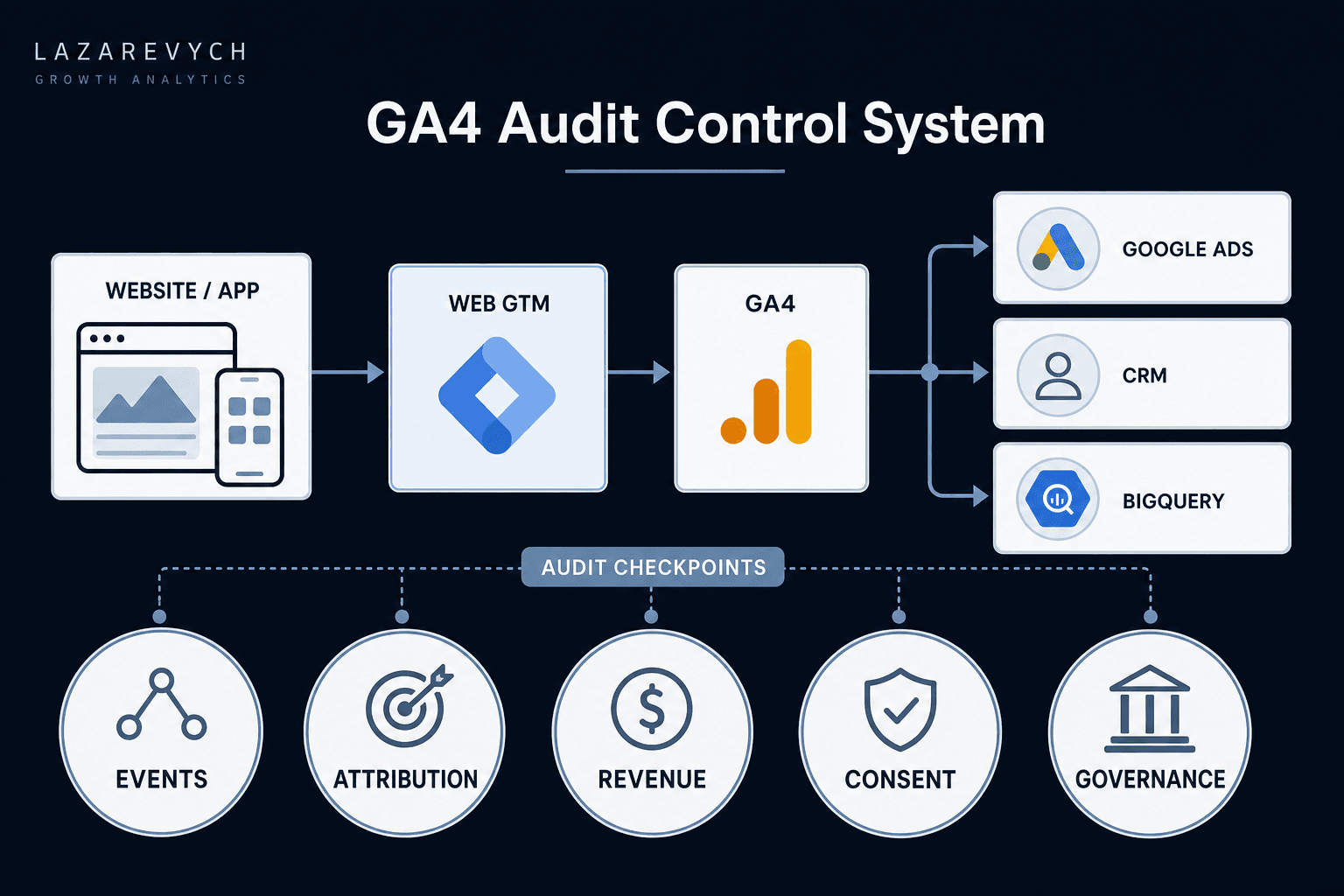
A practical GA4 audit framework for finding tracking, attribution, revenue and data-quality problems — and prioritising the issues that can damage business decisions.
A practical decision framework for estimating A/B test sample size, test duration and whether your traffic is high enough to make the experiment worth running.
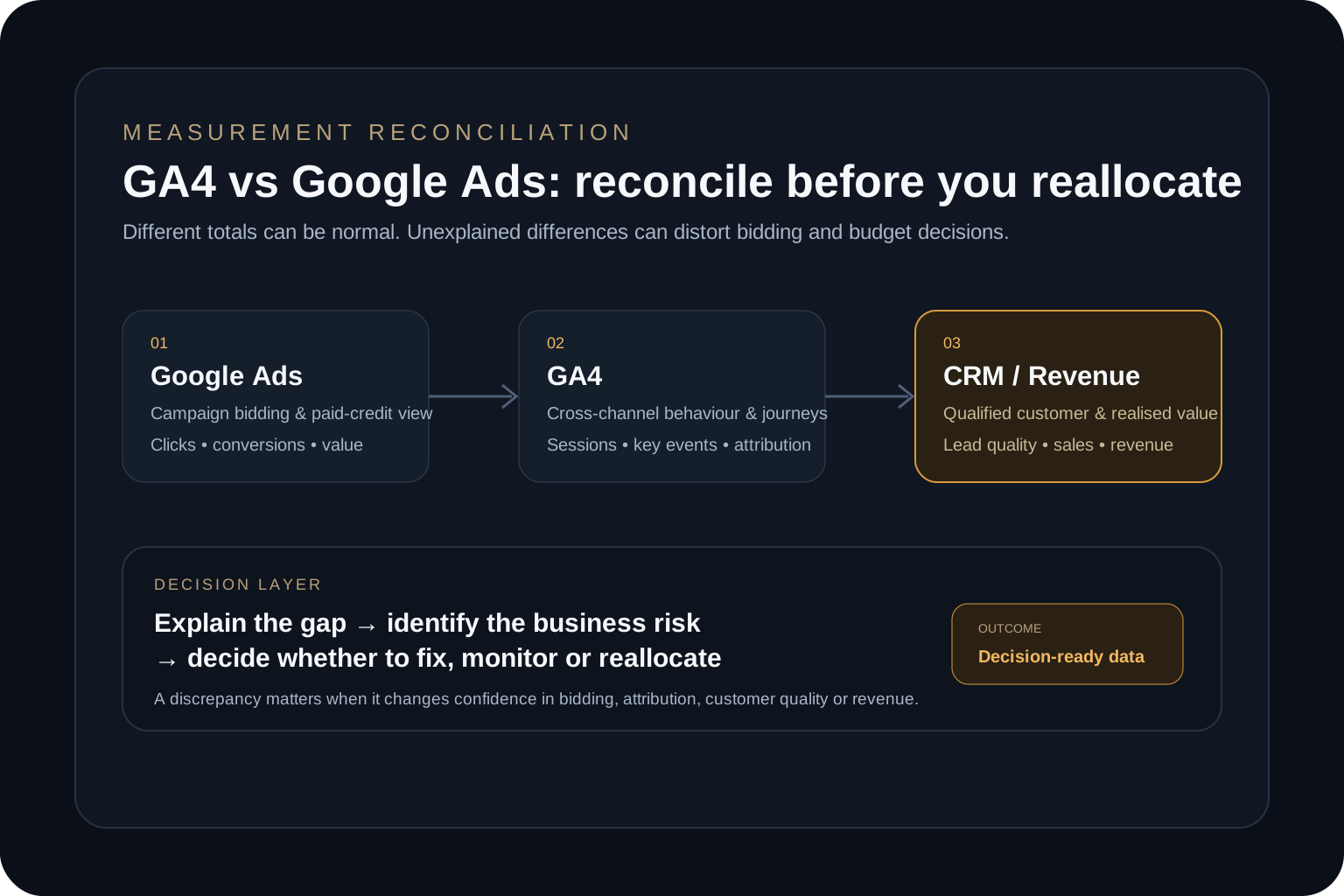
A decision-first audit framework for diagnosing GA4 and Google Ads conversion discrepancies before they distort bidding, attribution and budget allocation.