Marketing Budget as a Percentage of Revenue: When the Rule Breaks
A practical decision framework for knowing when a marketing-spend percentage is enough—and when growth planning needs CAC, margin, payback and revenue-target math instead.
“What percentage of revenue should we spend on marketing?” sounds like a budgeting question. In practice, it is usually a growth-risk question.
A percentage can tell you whether the proposed budget looks large or small relative to revenue. It cannot tell you whether the spend can acquire enough customers, whether those customers are profitable, or whether the next dollar of budget will perform like the last one.
That distinction matters for founders, finance leaders and growth teams trying to choose between maintaining spend, funding a new growth target, or reducing acquisition because unit economics have weakened.
The short answer
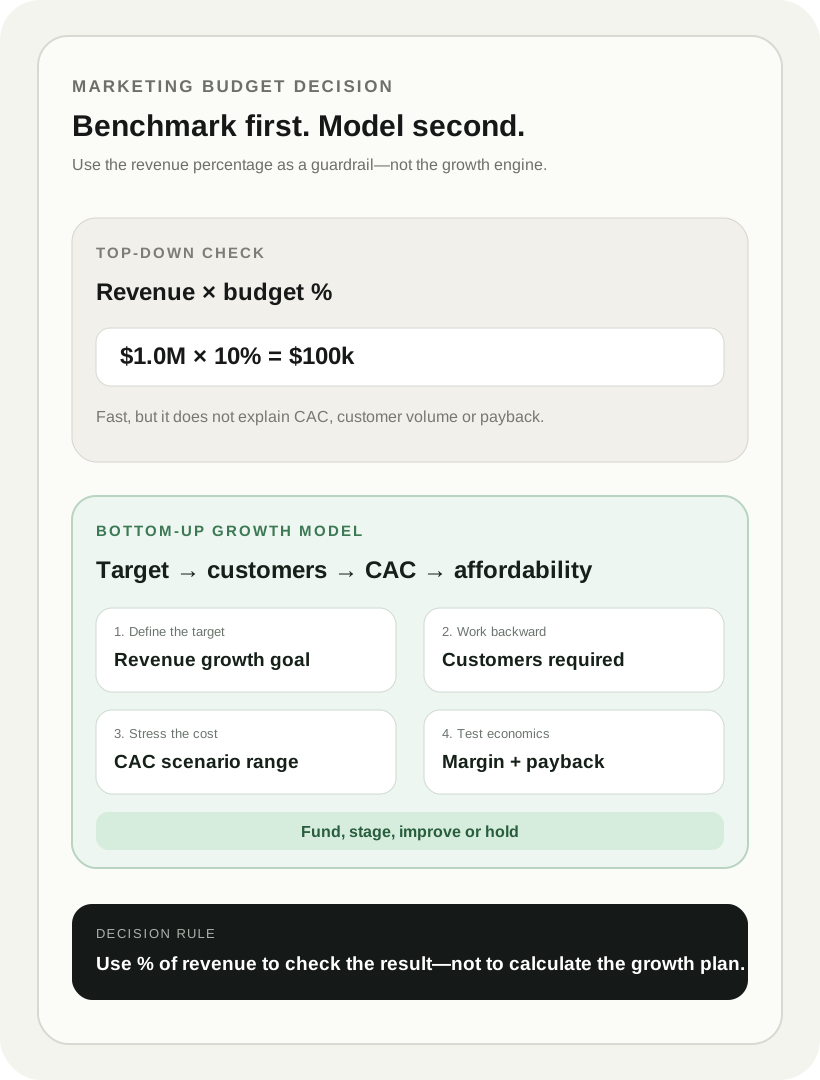
Use a marketing budget percentage of revenue as a guardrail, not as the operating model.
If your business is stable and you only need a quick top-down planning range, a percentage can be useful. If you are trying to hit a specific growth target, enter a new market, increase paid acquisition, or recover investment within a defined payback period, build the budget from the economics upward.
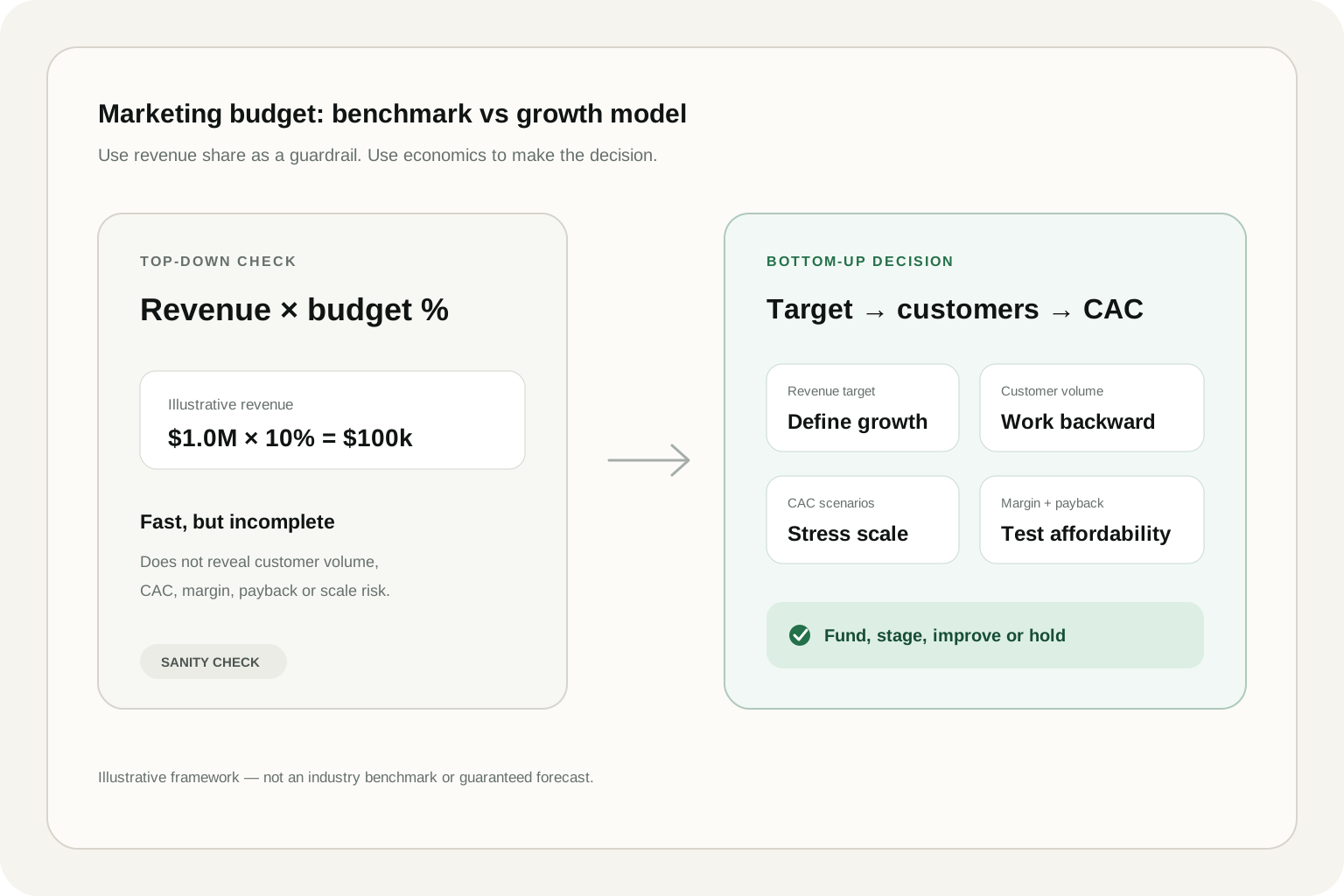
A percentage benchmark is a fast top-down check. A growth decision needs a bottom-up model that connects spend to customers, economics and the revenue target.
Why percentage rules are popular
Percentage-based budgeting survives because it is simple. Revenue is already available in the financial plan, the calculation is easy to explain, and the result creates an immediate reference point for leadership.
If a company expects $2 million in annual revenue and allocates 8% to marketing, the budget is $160,000. That is useful for capacity planning and for asking whether a proposed number is broadly plausible.
But the calculation hides nearly every variable that determines whether the investment works:
how much of the budget is actually acquisition spend;
the number of customers required;
customer acquisition cost;
gross margin and contribution margin;
retention and customer lifetime value;
cash payback;
channel saturation and marginal CAC;
the conversion rate from lead to customer;
how much growth is expected from organic, sales-led or partner channels.
This is why two companies spending the same percentage of revenue can have completely different growth outcomes.
When the percentage rule breaks
The percentage rule becomes least reliable precisely when the decision is most important: during a meaningful change in growth rate, channel mix or business economics.
Table 1. When percentage-of-revenue budgeting is useful—and when it is not
Swipe horizontally to view all columns →
Table 1. When percentage-of-revenue budgeting is useful—and when it is not
Situation
Percentage rule
Better planning method
Stable business, similar growth target
Useful as a fast guardrail
Validate against recent CAC and margin
Large revenue-growth target
Weak: assumes spend scales with revenue
Work backward from target customers and CAC scenarios
New market or channel
Weak: historical percentage has little predictive value
Stage budget with explicit test thresholds
Falling gross margin or retention
Dangerous: affordability may shrink while revenue grows
Recalculate maximum CAC and payback
Rapidly rising CAC
Misleading: historical efficiency may not survive scale
Use marginal CAC and scenario ranges
1. When revenue is the output you are trying to create
If the goal is to increase revenue materially, setting marketing spend as a fixed percentage of that future revenue can become circular. You are using the desired outcome to determine the input that is supposed to create it.
Average CAC from the last quarter is not a promise from the next quarter. A larger budget may require broader audiences, additional channels, more expensive auctions or lower-intent inventory. The important planning variable becomes the cost of the next customers, not only the historical average.
3. When revenue growth and profitability move in opposite directions
A business can grow revenue and simultaneously reduce the amount it can afford to pay for a customer. Lower gross margin, shorter retention or slower cash recovery can make the same acquisition cost less attractive.
A useful planning process combines both methods, but gives them different jobs.
Table 2. Top-down benchmark versus bottom-up growth planning
Swipe horizontally to view all columns →
Table 2. Top-down benchmark versus bottom-up growth planning
Question
Percentage of revenue
Bottom-up growth model
How fast can we get a planning number?
Very fast
Requires consistent inputs
Does it connect spend to customer volume?
No
Yes
Does it account for CAC?
No
Yes, ideally as a range
Does it test affordability?
No
Yes, through margin, LTV and payback
Best use
Top-down sanity check
Funding and scale decisions
The percentage is therefore not useless. It is simply being asked to do too much when teams use it as the primary growth model.
Worked example: the same 10% can mean two different decisions
Consider two businesses with the same annual revenue: $1 million.
Both allocate 10% of revenue to marketing, so both show a $100,000 annual marketing budget. On a percentage dashboard, they look identical.
Table 3. Same revenue share, different economics — illustrative example
Swipe horizontally to view all columns →
Table 3. Same revenue share, different economics — illustrative example
Metric
Business A
Business B
Revenue
$1,000,000
$1,000,000
Marketing budget
$100,000
$100,000
Marketing % of revenue
10%
10%
Illustrative CAC
$200
$500
Illustrative gross profit per new customer
$900
$600
Implication
More room to test incremental acquisition
Needs tighter economics before scaling
These numbers are illustrative, not benchmarks. Their purpose is to expose the information that the 10% figure hides. Business A and Business B should not automatically make the same budget decision just because marketing represents the same share of revenue.
Four checks before setting the budget
Check 1: What revenue is marketing expected to influence?
Separate total company revenue from acquisition-driven revenue. If renewals, expansion, partnerships or a sales team create a meaningful share of growth, do not assign the entire target to paid marketing.
Check 2: What CAC can the business afford?
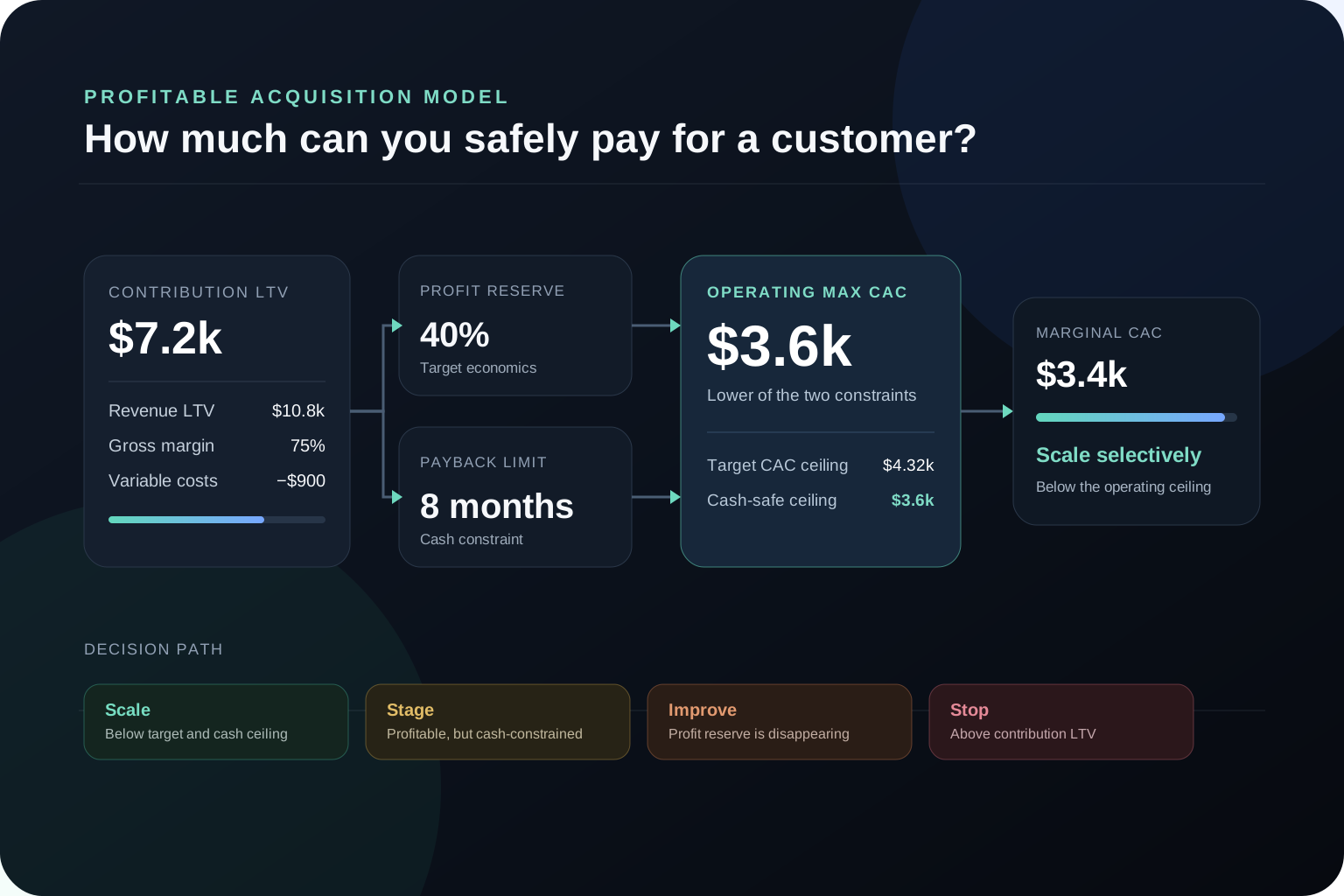
CAC should be evaluated against gross profit, retention and the time required to recover acquisition spend. A target that is technically reachable can still be financially unattractive.
Check 3: What happens if acquisition becomes less efficient?
Plan at least a conservative, base and upside scenario. If the plan only works when CAC stays at the best historical level, the budget is fragile.
Check 4: Can the measurement system verify the result?
The model is only as useful as the inputs. Campaign spend, acquired customers and comparable revenue must use consistent definitions. If CRM revenue cannot be reconciled with acquisition data, fix the measurement layer before making a large allocation decision.
A practical decision framework
Use the percentage benchmark last, not first:
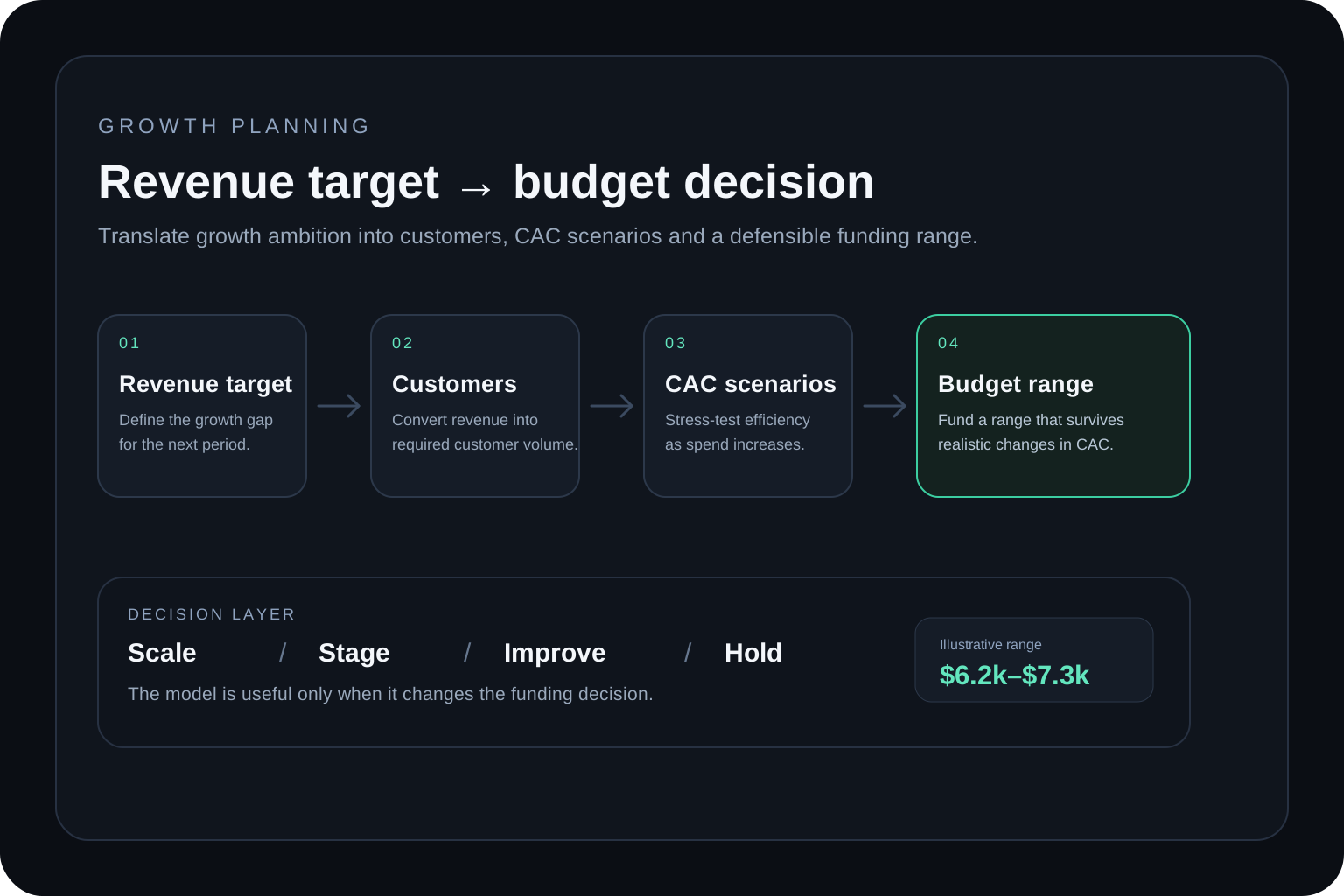
Define the revenue target. Clarify whether it applies to total revenue or acquisition-driven revenue.
Estimate required customers. Use comparable revenue per acquired customer.
Model CAC as a range. Do not assume the historical average stays fixed.
Check margin and payback. Make sure the economics can fund the acquisition plan.
Set scale thresholds. Decide in advance what CAC, conversion rate or payback deterioration would pause the next budget increment.
Compare the resulting budget with revenue. Now the percentage becomes a useful executive-level sanity check.
Common marketing-budget mistakes
Copying a benchmark from another company. The accounting definition, growth stage and margin structure may be different.
Mixing acquisition spend with the full marketing operating budget. This can make CAC calculations meaningless.
Using total revenue in the denominator without understanding its sources. Existing-customer revenue can make acquisition investment appear artificially small.
Assuming average CAC equals marginal CAC. Scaling can change audience quality and auction economics.
Ignoring cash recovery. A profitable customer can still create a cash-flow problem if payback is too slow.
Treating the annual budget as fixed. A staged budget with explicit scale/hold rules often gives the business more control.
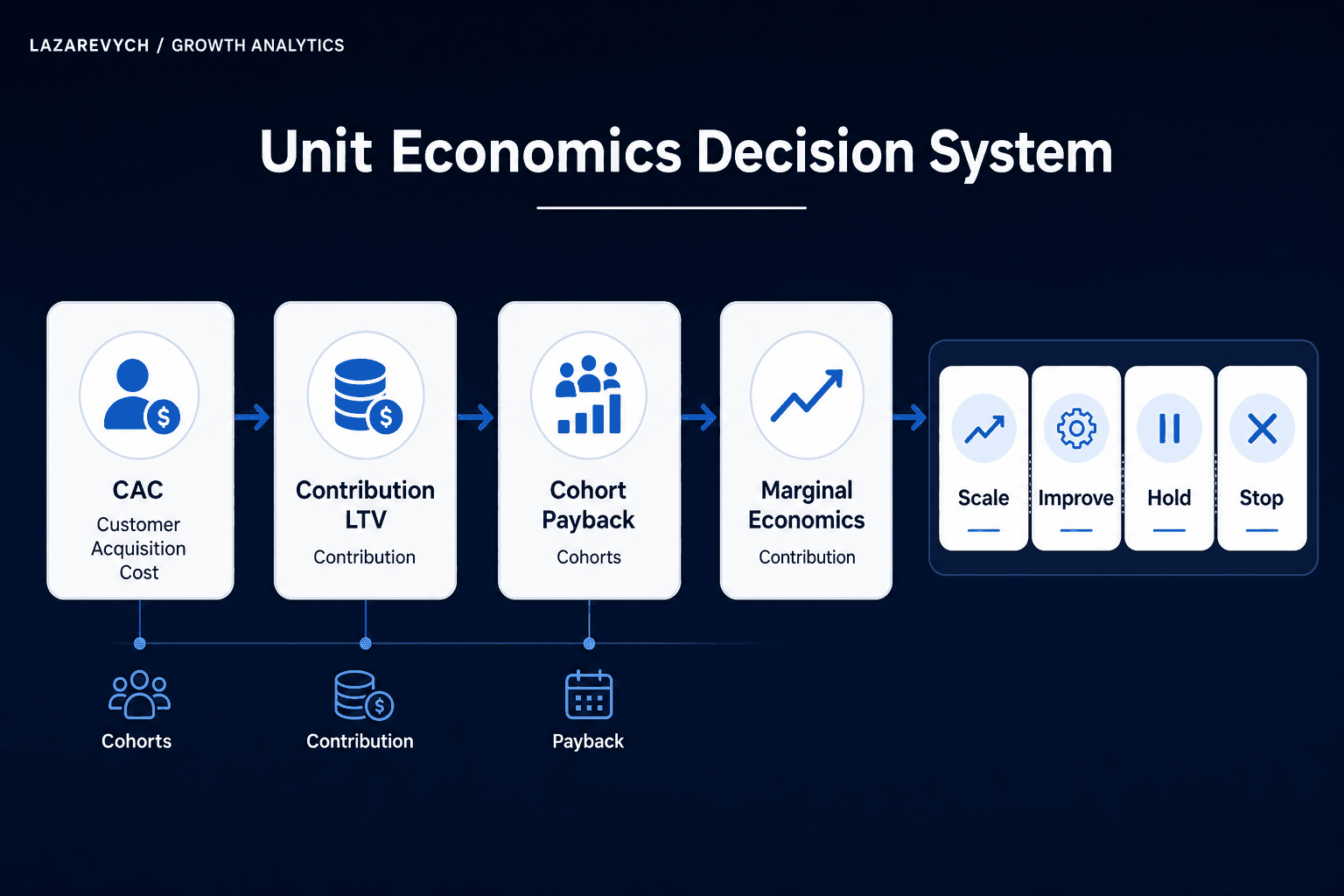
If cash recovery is the main constraint, the guide to CAC, LTV and payback period shows how those metrics should work together rather than being read in isolation.
When a calculator is more useful than a benchmark
A benchmark is enough when you need a quick reference. A calculator becomes more useful when you have a defined growth target and want to understand the consequences of changing CAC, customer volume or expected revenue.
The Marketing Budget & Growth Planner turns a baseline month and growth target into a scenario-based planning range. The goal is not to produce false precision. It is to make the assumptions visible enough that a founder, growth lead or finance partner can challenge them before the budget is committed.
If the result suggests that the required CAC is above what your economics can support, the right answer may not be “spend less.” It may be to improve conversion, pricing, gross margin, retention or the channel mix before trying to scale.
Frequently asked questions
What percentage of revenue should a company spend on marketing?
There is no universal percentage that determines the correct budget. A revenue percentage can provide a top-down reference, but the operating budget should reflect growth targets, CAC, margin, retention, payback and the share of growth marketing is actually expected to produce.
Is 10% of revenue a good marketing budget?
It can be reasonable for one company and too high or too low for another. The useful test is whether that budget can acquire enough profitable customers and whether the business can tolerate the cash-recovery period.
Should a startup use a percentage-of-revenue marketing budget?
Usually not as the primary method. Early-stage revenue can be too small or too volatile to anchor a growth budget. A staged plan based on customer economics, learning goals and explicit stop/scale thresholds is generally more useful.
How should a business set a marketing budget for a revenue-growth target?
Work backward from the target to the number of new customers required, model a realistic CAC range, check affordability using margin and payback, and then compare the resulting investment with revenue as a final sanity check.
A practical framework for turning a revenue target into a defensible marketing budget using customer volume, CAC scenarios, unit economics and decision-ready data.
A practical guide to CAC, LTV and payback that separates decision-grade unit economics from misleading averages—so growth leaders know when to scale, investigate or stop spend.