A buyer's guide to A/B testing consulting fees, readiness, scope, deliverables and the evidence required before a result can guide a business decision.
An A/B testing consultant cost should reflect the decision being de-risked, the evidence required and the work needed to run a valid experiment—not the number of variants entered into a tool. A narrow review of one test is different from designing, implementing and operating an experimentation program. Before buying, define the decision, eligible audience, baseline event, minimum meaningful effect, engineering boundary and the action that follows each possible result.
This site does not publish a fixed A/B testing package price. That is intentional: quoting before traffic, instrumentation and implementation risk are understood creates false precision. A credible proposal should separate diagnosis, experimental design, build and QA, analysis, and ongoing program operation. It should also say when A/B testing is not the right method.
The short answer
Buy a focused consultation when your team can implement the test but needs help with design, power, guardrails or interpretation. Buy end-to-end support when the consultant must audit measurement, write requirements, coordinate engineering, QA variants, monitor exposure and produce a decision record. Buy an ongoing experimentation program only when the organization has enough traffic, product velocity and ownership to sustain a backlog.
What you are actually buying from an A/B testing consultant
The visible experiment is only the middle of the engagement. Before launch, someone must establish the baseline, confirm event quality, define eligibility and exposure, prevent sample-ratio problems, choose primary and guardrail metrics, estimate required sample size and document stopping rules. After launch, the team needs monitoring, analysis, segmentation rules, interpretation and a record of what will change.
Decision framing. Translate a broad growth idea into one reversible decision and explicit outcomes.
Evidence design. Define the unit of randomization, population, metrics, effect threshold, power assumptions and analysis plan.
Implementation control. Specify assignment, persistence, exposure logging, variant behavior and QA across devices.
Operational safety. Monitor guardrails, data loss, sample ratios and business risks without opportunistic stopping.
Decision transfer. Explain uncertainty, exclusions and follow-up actions so stakeholders can act without reinterpreting a dashboard.
Tool access alone does not provide those controls. Optimizely, VWO, Statsig or an internal feature-flag system may execute assignment, but the buyer still owns the business definition and must understand how instrumentation, identity and analysis affect the result.
The experiment readiness gate
01 · Decision
One material choice and a pre-agreed action
02 · Evidence
A stable baseline event and trustworthy exposure data
03 · Feasibility
Enough eligible units for the meaningful effect
04 · Delivery
Engineering, QA, monitoring and an accountable owner
This gate protects buyers from commissioning a polished experiment that cannot answer the question. A low-volume B2B funnel may need months to detect a small purchase-rate change, while a higher-frequency activation event may provide a faster decision. The consultant should not silently substitute a convenient metric for the business outcome; the relationship between the two must be stated.
The numerical illustration below is not an industry benchmark. It shows why throughput depends on readiness. If a team begins a quarter with twelve ideas but only eight have measurable events, six have sufficient traffic and four have implementation capacity, the practical test capacity is four—not twelve.
Ideas12
Measurable8
Feasible6
Launch-ready4
Illustrative planning example only; not a benchmark or forecast.
Decision brief, feasibility, analysis and QA requirements
Production implementation
End-to-end experiment
A team needing design through decision support
Specification, build coordination, QA, monitoring and decision record
Unlimited product development
Experimentation program
Recurring product or conversion decisions
Governance, backlog, templates, cadence and capability transfer
A guaranteed uplift
Measurement repair
Unreliable assignment, exposure or outcome data
Validated events, identity and acceptance tests
The experiment itself unless scoped
What changes the final consulting cost
The largest cost drivers are usually coordination and uncertainty rather than the statistics calculation. Scope expands when the consultant must discover undocumented events, support multiple platforms, resolve anonymous and authenticated identity, work across product and marketing teams, build variants, integrate a testing platform, or reconcile revenue after the conversion.
Table 2. Scope drivers and buyer evidence
Swipe horizontally to view all columns →
Table 2. Scope drivers and buyer evidence
Driver
Why it adds work
Evidence to provide
Traffic and baseline
Determines feasibility and calendar risk
Eligible users, conversions and seasonality by week
Metric quality
Requires validation before power calculations are useful
Event definitions, QA evidence and source reconciliation
Technical delivery
Variants, feature flags and cross-device behavior require engineering
Stack, owners, release process and environments
Risk and governance
Pricing, legal, privacy or revenue tests need stronger controls
Guardrails, approvals and rollback owner
Program scale
Multiple teams require templates, prioritization and training
Backlog, roadmap, decision owners and expected cadence
A credible A/B testing consulting process
Define the decision. State the current behavior, proposed change, target population and action for positive, negative and inconclusive results.
Audit feasibility. Validate events and exposure, inspect baseline volume and estimate sample and duration using an effect that matters commercially.
Pre-register the operating rules. Name primary and guardrail metrics, exclusions, segments, stopping logic, QA and owners.
Build and validate. Test assignment, persistence, logging, variant experience, performance and rollback before exposing the full audience.
Monitor without result shopping. Watch safety and data-quality signals while preserving the agreed analysis.
Decide and archive. Report estimates and uncertainty, explain limitations, record the action and feed evidence into the next hypothesis.
For research, hypothesis prioritization, experiment design and interpretation, see the Conversion Rate Optimization & Experimentation service. When the experiment also needs production instrumentation, platform integration or technical delivery, Growth Engineering is the build path. For a self-serve feasibility check, use the A/B Test Calculator with actual eligible traffic and baseline conversions.
Deliverables that should exist when the engagement ends
a decision and hypothesis brief with owner and deadline;
validated baseline, exposure and outcome definitions;
sample-size, duration and minimum-effect assumptions;
implementation, QA, guardrail and rollback requirements;
an analysis plan with exclusions and segmentation rules;
a launch and monitoring record;
a result memo reporting effect estimates and uncertainty;
a decision log, reusable learnings and prioritized follow-up backlog.
A screenshot of a platform declaring a winner is not a complete handover. The result must remain traceable to the population, implementation, metric definitions and decision rule used at the time.
How to choose an experimentation consultant
Ask candidates to critique a proposed test rather than promise uplift. Strong consultants will discuss traffic constraints, instrumentation risk, effect sizes, guardrails and situations where a test should not run. Request a sample decision record, QA checklist and scope boundary. Confirm who writes production code, who owns platform fees and who approves launch and rollback.
Avoid proposals built around a guaranteed number of winners. The consultant controls process quality, not customer behavior. A commercially useful engagement may prevent an expensive launch, identify that evidence is insufficient or show that the current experience should remain unchanged.
Frequently asked questions
How much does an A/B testing consultant cost?
The price depends on whether you need a readiness audit, one validated test, implementation support or an ongoing experimentation program. This site does not publish a fixed A/B testing package price, so the proposal should define decisions, traffic, engineering dependencies, test volume, deliverables and acceptance criteria before quoting.
When should a company hire an A/B testing consultant?
Hire external support when a meaningful decision can be tested, traffic is sufficient, measurement is trustworthy and the team lacks experimental design, implementation or analysis capacity. If traffic or instrumentation is weak, a consultant should recommend a different validation method or repair the measurement foundation first.
What should A/B testing consulting include?
A credible engagement should include a decision brief, baseline evidence, hypothesis and prioritization logic, power and duration assumptions, implementation and QA requirements, guardrail metrics, an analysis plan, a decision record and a reusable backlog.
Is A/B testing the same as conversion rate optimization?
No. A/B testing is one validation method inside a broader CRO or experimentation program. CRO can also use qualitative research, funnel analysis, usability testing, analytics repair and iterative implementation when a controlled test is not practical.
Can a low-traffic B2B SaaS company run A/B tests?
Sometimes, but not every decision is testable with a conventional fixed-horizon experiment. Low-traffic teams may need larger detectable effects, longer runtime, higher-frequency activation events, sequential methods or non-experimental validation. The method should follow the decision and available evidence.
The right A/B testing consultant does not sell certainty. They create a disciplined route from a valuable question to evidence the organization can inspect, act on and reuse.
Scope an experimentation engagement your team can trust
Share the decision, baseline conversion, traffic, implementation stack and deadline. The first recommendation may be a test, a measurement repair or a different validation method.
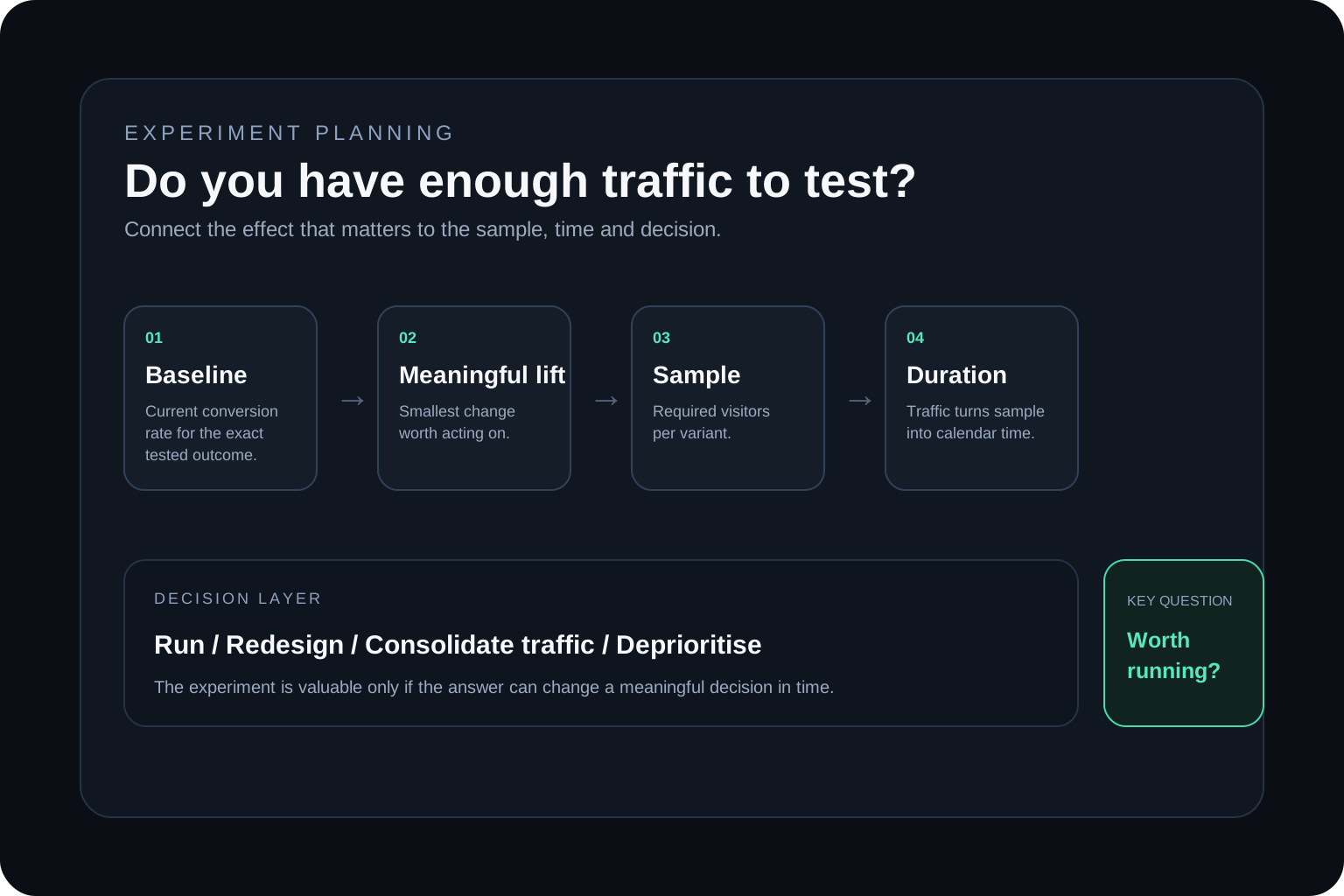
A practical decision framework for estimating A/B test sample size, test duration and whether your traffic is high enough to make the experiment worth running.
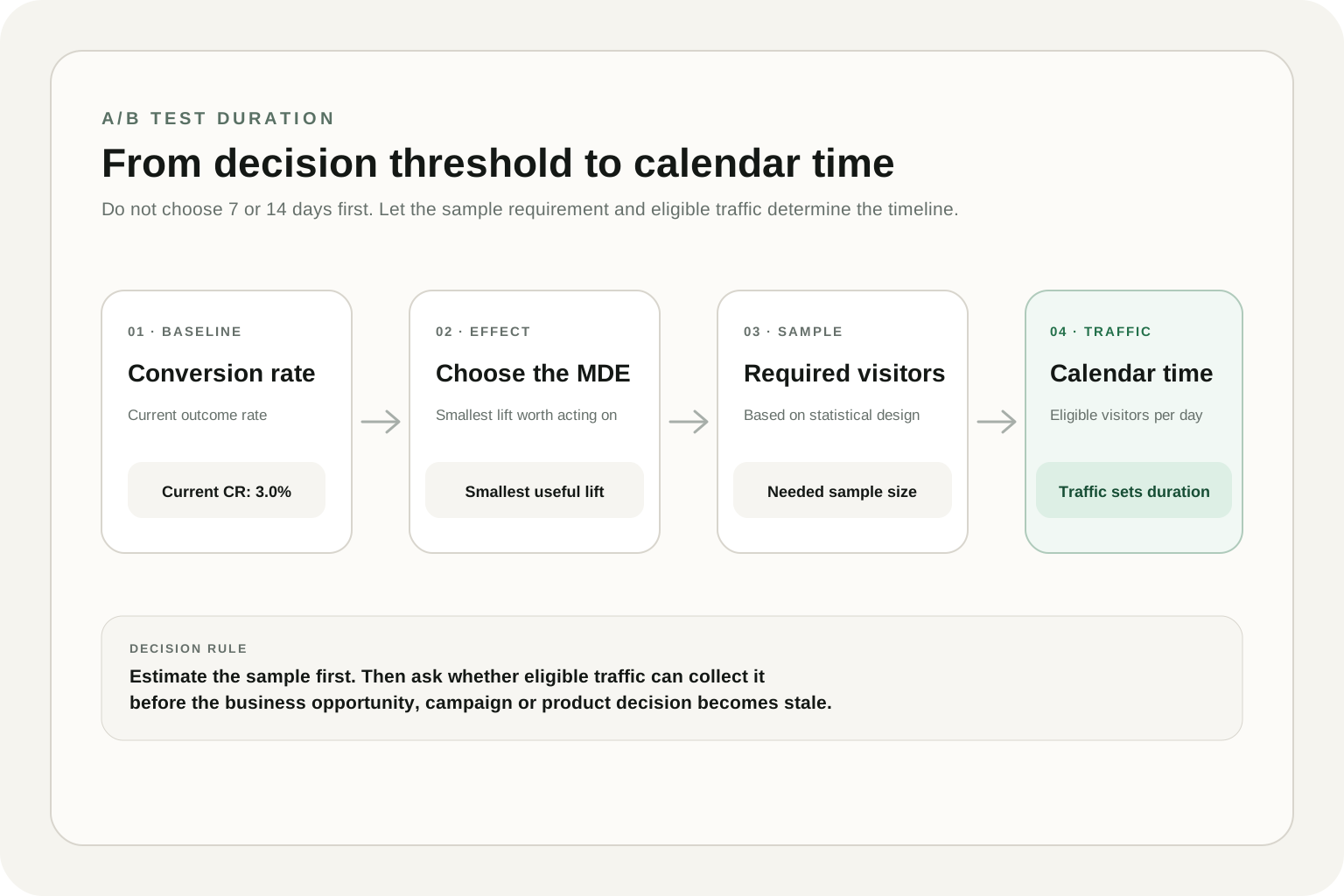
A practical guide to estimating A/B test duration from sample size, eligible traffic, baseline conversion rate and the smallest effect worth detecting.
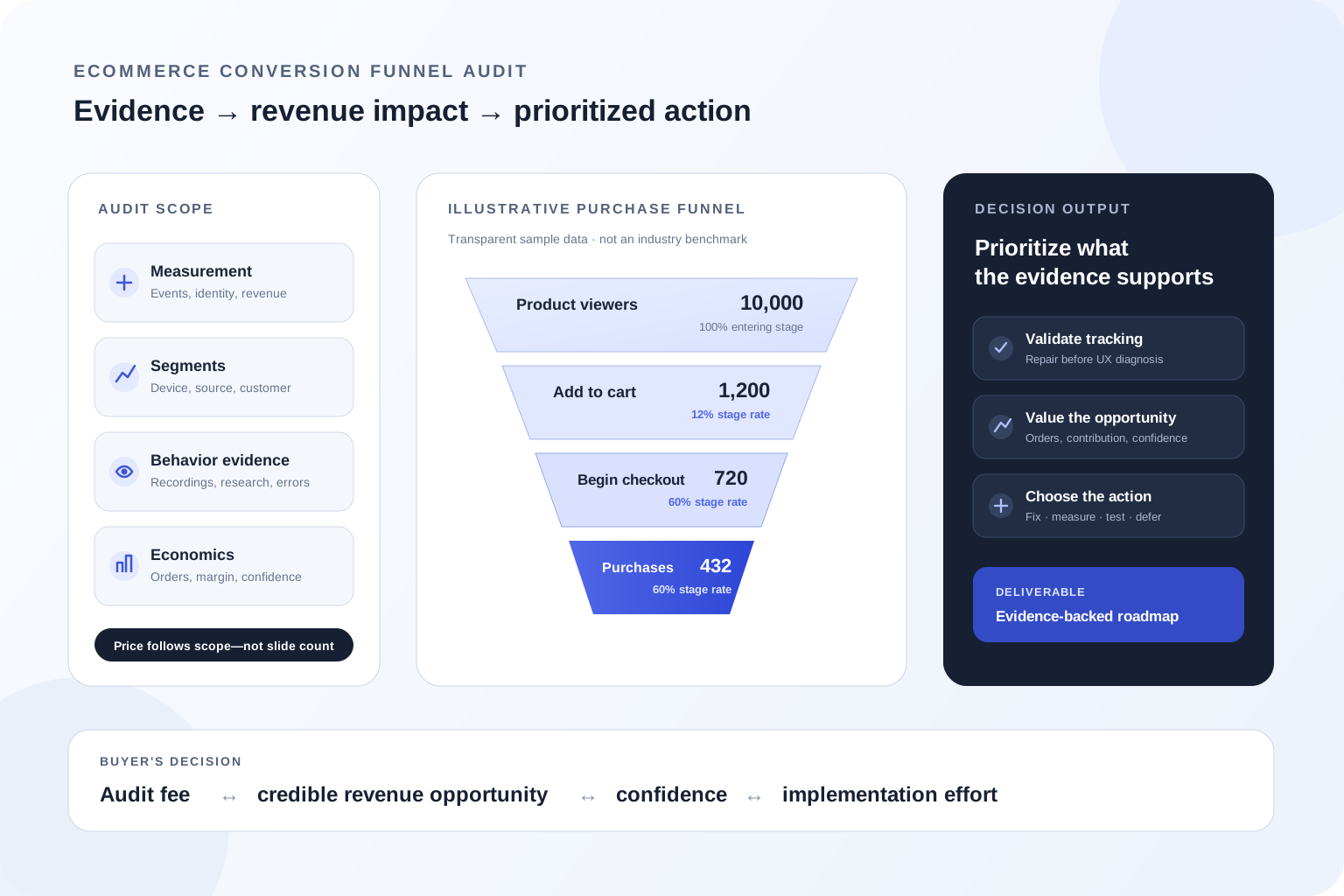
A buyer's guide to ecommerce funnel audit pricing, scope and deliverables—with a practical model for valuing conversion leaks before you hire a CRO consultant.